OnlyCuffsOnlyCuffsarchive search
The Forum at Handcuffs.Org

Items Wanted

19 visible archived posts · 19 preserved total · topic ID 4626
Original topic ↗Recovered images
Paul Davies 07 Feb 2012
#1
Also looking for a good Maltby in working order - any type key.
Plug cuff for wrist not leg.


Abdul_islam 07 Feb 2012
#2
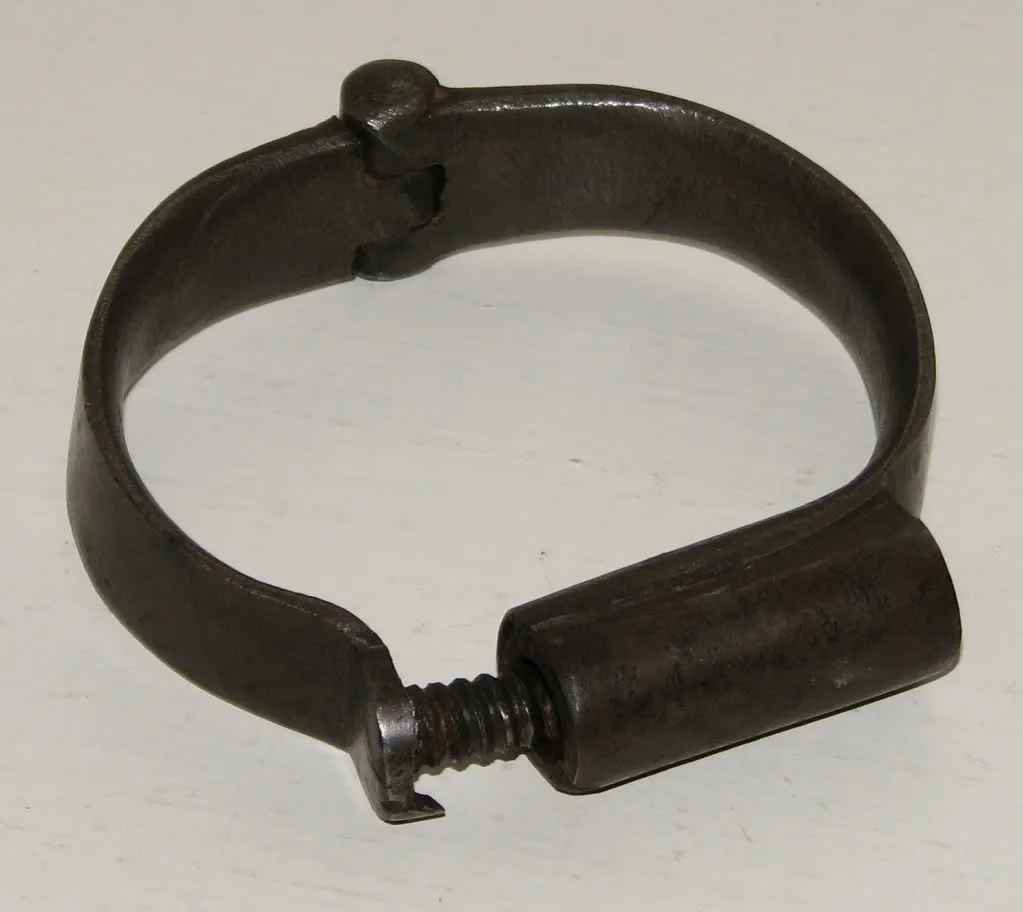
if you wish we make its
thanks
Anonymous 08 Feb 2012
#3
Also looking for a good Maltby in working order - any type key.
Plug cuff for wrist not leg.


Click to expand...
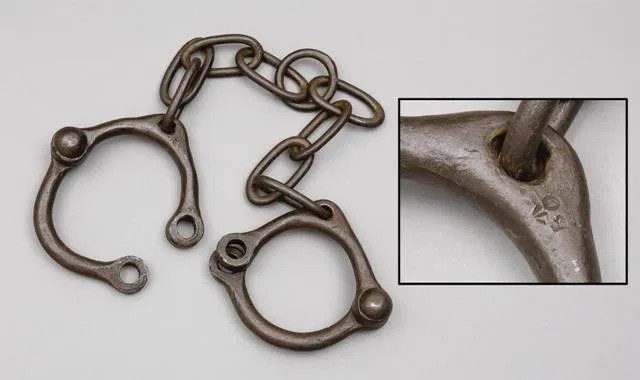
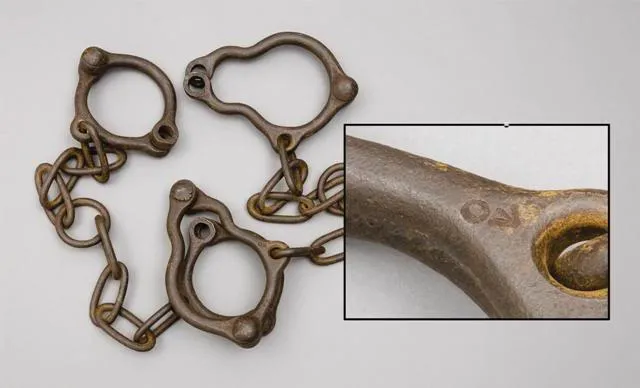
how much are a set of the convict leg irons worth, the top one in the picture, and how rare are they?
Steve Santini 09 Feb 2012
#4
Also looking for a good Maltby in working order - any type key.
Plug cuff for wrist not leg.


Click to expand...
I have a nice Maltby for sale. Perfect working order with one non original key. All springs good and strong and both sides double lock. See pic below. Asking $400.00 plus shipping.

Paul Davies 09 Feb 2012
#5
Also looking for a good Maltby in working order - any type key.
Plug cuff for wrist not leg.


Click to expand...
Hi Steve,
I had inquired about your Maltby cuffs for sale a few weeks ago and got no response. These ones are nice but a fair bit more than I wanted to pay.
Of course someone else here, I'm sure, is welcome to buy them if they have not already.
Thank you for the offer.

Paul

To answer the previous question - Convict leg iron worth - like any other cuff, it's based on authenticity/provenance, age, patina, construction, makers mark etc. They are not that rare, but how many are authentic?? Prices would start at about $25 on ebay for a repro.
Anonymous 09 Feb 2012
#6
Also looking for a good Maltby in working order - any type key.
Plug cuff for wrist not leg.


Click to expand...
How many have you seen Online anywhere for sale? I have been watching for years and have not seen any for sale. You must have a different supply than the rest of us
Paul Davies 09 Feb 2012
#7
Also looking for a good Maltby in working order - any type key.
Plug cuff for wrist not leg.


Click to expand...
Anon,
A pair sold on ebay Australia about a month ago. I bought a pair over a year ago which featured here in "Recent Auctions".

Ebay Aust do not have a category for handcuffs or similar so you have to search harder. About 1 or 2 good pairs sell per year.
Having said that, ebay is the last place that I would search for, or sell, a good pair of irons.
Private Auction Houses are the best place. Not on-line.

As for cheap repros, here's a link.
I personally sold 2 pair of these on ebay for less than I paid when I found that they were aluminum.

http://www.fremantleprison.com.au/Shop/ ... Large.aspx
Tom Parker 10 Feb 2012
#8
Also looking for a good Maltby in working order - any type key.
Plug cuff for wrist not leg.


Click to expand...
thanks for that information Paul, I am the proud owner of a very rare pair of early Australian convict leg irons, and wouldn't part with them.
Ian McColl 10 Feb 2012
#9
Also looking for a good Maltby in working order - any type key.
Plug cuff for wrist not leg.


Click to expand...
Hi Tom, can you please post a photo.

Ian
Tom Parker 11 Feb 2012
#10
Also looking for a good Maltby in working order - any type key.
Plug cuff for wrist not leg.


Click to expand...
Hi Ian, I would love to post a picture but so far I can't get it off photobucket, how about I email you the pictures this weekend.
Marty 11 Feb 2012
#11
Also looking for a good Maltby in working order - any type key.
Plug cuff for wrist not leg.


Click to expand...
For the style of top and bottom irons pictured, were they manufactured in Australia or imported from England? Typically, English irons (hand or leg) use a clevis to attach the chain to the shackles, and the links of the chain are much smaller and hence there are more of them. Using a hole smithed into the shackle (instead of a clevis) to attach the chain, and using a chain with fewer, elongated links, with the round link in the center, seem to be the signature hallmarks of an Australian convict iron. So, are these indeed an Australian design and not a British import?
Paul Davies 11 Feb 2012
#12
Also looking for a good Maltby in working order - any type key.
Plug cuff for wrist not leg.


Click to expand...
At the time, Australia was just a collection of small English colonies, so everything was English, but the chain design for Australian purposes seems to be fairly standard - four oval links either side of a larger round link. There was a lot of variation as these were not factory made but blacksmith made locally, although one example is stamped with the manufacturers name - Moreton & Foster.

Officially they were called French basil leg irons as you will see from this Government Tender.


To aid working, the central link was often removed. As punishment a single long link was used instead, they were double ironed (2 pairs) or both irons put on one leg.

The irons were often "ovalled" to allow them to be slipped off. This was not just for escaping, but it was common practice to take them off before bed!!!

Here's another interesting link.

Paul

Paul 11 Feb 2012
#13
Also looking for a good Maltby in working order - any type key.
Plug cuff for wrist not leg.


Click to expand...
the link
http://norfolkislandmuseum.blogspot.com ... nelle.html
Vince 11 Feb 2012
#14
Also looking for a good Maltby in working order - any type key.
Plug cuff for wrist not leg.


Click to expand...
Paul,

Thanks for providing the Museum link - Very interesting!

--Vince
Paul Davies 12 Feb 2012
#15
Also looking for a good Maltby in working order - any type key.
Plug cuff for wrist not leg.


Click to expand...
http://www.sl.nsw.gov.au/discover_colle ... index.html
This new Link and this new pic relate to a previous thread of mine. While it may be just an artists impression of the device, it should be close to the mark.


I can only find one reference to torturous devices used (un)officially in Australia, apart from the extra heavy irons. A case where 2 soldiers in the early 1800s intentionally committed an offense to be come convicts. They thought serving a sentence would be a better life than being a soldier but got more than they bargained for. Private Sudds died most likely from the spiked collar being too tight around his wind pipe. I have also read of cases where Governor Sorrell put spiked collars on female convicts in Van Diemen's Land but can no longer find my source.

http://gutenberg.net.au/ebooks06/0602691.txt

GOVERNOR RALPH DARLING'S IRON COLLAR.
The chains which Private Thompson worked in, as above mentioned, had been left at
Emu, and were brought for us to see. They were of a very unusual
description, and the iron collar reminding me of those I had seen on
condemned slaves, &c., in South America, I was anxious to examine them,
and from this motive was induced to put them on my own person, as did
also Lieutenant Christie, of the Buffs. We had but one opinion as to the
torture they must have produced. . . . I found it quite impossible
whilst I had the collar and irons on me to lie down, except on my back
or face, there being two long iron spikes projecting from the iron
collar which was riveted round the neck, which put it quite out of my
power to turn over to the other side; independently of which there were
two chains on either side extending from the collar and communicating
with those on the legs. . . . I guessed the weight at about 30 lbs. or
40 lbs., or even upwards."
Steve Santini 12 Feb 2012
#16
Also looking for a good Maltby in working order - any type key.
Plug cuff for wrist not leg.


Click to expand...
In my collection a very early hand forged neck collar with two spikes protruding off of it like the ones mentioned above.

While the spikes are not as obviously long as the artistic rendition, they would have the same effect with wearer having a hard night of it if they chose to move around.

Steve Santini
Marty 12 Feb 2012
#17
Also looking for a good Maltby in working order - any type key.
Plug cuff for wrist not leg.


Click to expand...
Paul:

French Basil Leg Irons! I love it. Sounds like something you'd see on the menu at a fancy restaurant.

I found the tender notice quite interesting and instructive. It does seem, at least by 1832, that New South Wales was becoming increasingly self-sufficient and did not have to rely exclusively on English imports.

I've seen old Australian photos with shackles displayed hanging on a wall behind the person photographed (not SS Success publicity photos). These included darby style handcuffs and leg irons. Any idea if these were also locally manufactured rather than imported?
Paul 12 Feb 2012
#18
Also looking for a good Maltby in working order - any type key.
Plug cuff for wrist not leg.


Click to expand...
Marty,
I have heard of them being made locally but I cannot positively identify one. There are many without makers names on them. The same newspapers as that shown also ask for tenders to supply handcuffs, and every other item required, from nails to buckets. So if they were making keyed handcuffs, then it stands to reason that they were making keyed leg irons. But i think riveted were the irons of choice.
I've read that English irons were considered inferior.
Marty 12 Feb 2012
#19
Also looking for a good Maltby in working order - any type key.
Plug cuff for wrist not leg.


Click to expand...
Thanks, Paul. Considering how and why the bulk of the first Europeans got to Australia, it is rather understandable why they would be inclined to regard anything of English origin "inferior."

Thanks for posting the link to Old Tales of a Young Country. I had forgotten the name of the book and hence, lost track of it. As you observed, in the illustration of the two soldier/convicts, the engraver did take some artistic license. In going back through the book, here's the description of their peculiar punishment irons:


The order having been
read, the regimentals were stripped off the backs of the two men, and
replaced by the yellow convict clothing, while a set of irons was placed
upon each of them. During this operation Sudds was obliged to sit upon
the grass. "These irons," says the editor of the Australian, "were of a
peculiar kind. The rings from the ankles are made after a peculiar
fashion, and are of an uncommon size. In place of having chains attached
to them in the common way, they are connected by means of long and
slender chains with another ring, which is put round the neck, and
serves as a collar. Two thin pieces of iron, each about eight inches
long, protrude from the ring collar, in front under the chin, behind
under the nape of the neck. This is the position of the pieces of iron
(they are not spikes, not being sharp at the end) when the chains are
put on and adjusted as intended. From this it is evident that the degree
of ease or torture experienced by the wearer must depend entirely upon
the length of the several chains. He can't lie down on his back or on
his belly without twisting round the collar, in order to remove the
projecting irons to the side. If the chains be not longer than that part
of the body between the ankles and the neck, he never can extend himself
at full length, but must remain partly doubled up, and become cramped in
the course of a short time; for in turning the collar in order to lie
down, the chains wind and form a curvature round the body, thus
diminishing in effect their length." The weight of these irons was,
according to Captain Robison, between 30 and 40 lbs.


I'll dig around in my stuff and see if I can find any references that I too recall of women convicts being placed in spiked collars. As I vaguely seem to remember, these were used on women in lieu of leg irons for punishment and had three, rather than two, equally spaced prongs projecting from the metal collar. In this configuration, regardless of how the collar was positioned on the neck, the convict would be unable to comfortably lie down to sleep.

In case you don't have it, here's another nifty narrative regarding early Australian convict history I've enjoyed:
http://gutenberg.net.au/ebooks03/0301291.txt
While I suspect there was some artistic license taken in recounting Mr. Rashleigh's exploits, it is interesting, particularly due to its antique 19th century narrative style.