
OnlyCuffsOnlyCuffsarchive search
The Forum at Handcuffs.Org

Visit to the Roman Museum in Aalen (Germany)

17 visible archived posts · 17 preserved total · topic ID 4734
Original topic ↗Recovered images
Nils 09 Apr 2012
#1
Dear all,

we took the opportunity of a trip to my wife's family to visit to the Roman Museum in Aalen, South Western Germany.

http://www.museen-aalen.de/sixcms/detai ... reich=1599

The museum is built next to an excavated Roman fort. As luck would have it, they currently have an exhibit "Crime in ancient times", which displayed some bent locks (opened by intruders), but also locking chests, shackles and handcuffs.

Kind regards,
Nils


Here are some of the exhibits:


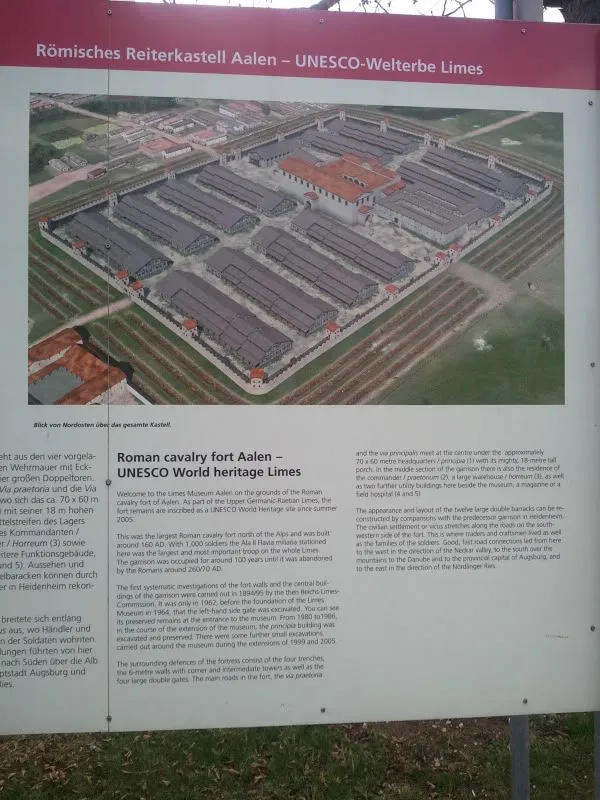
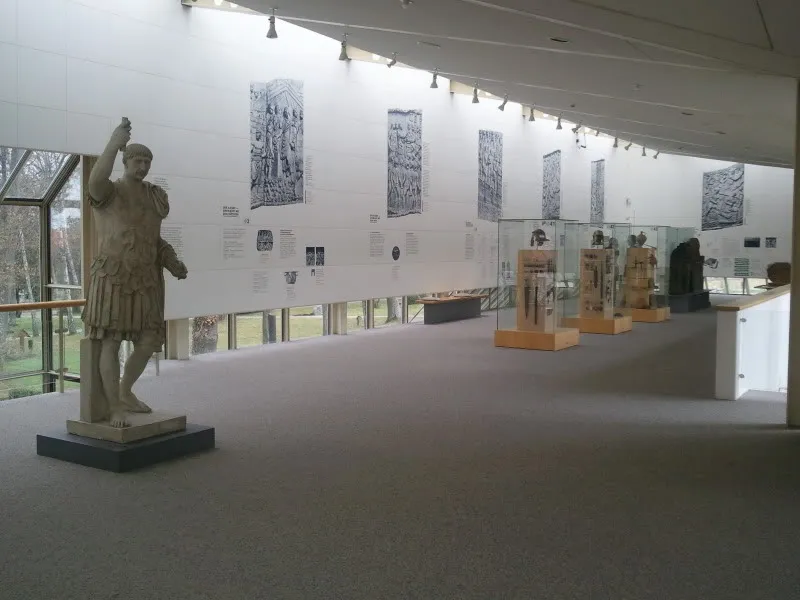
The museum.


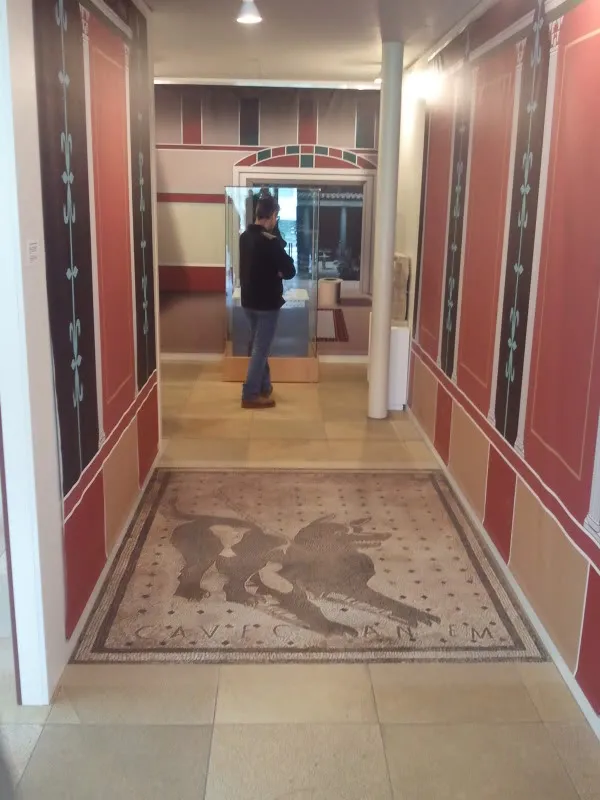
The classic "Beware of the Dog" (cave canem)


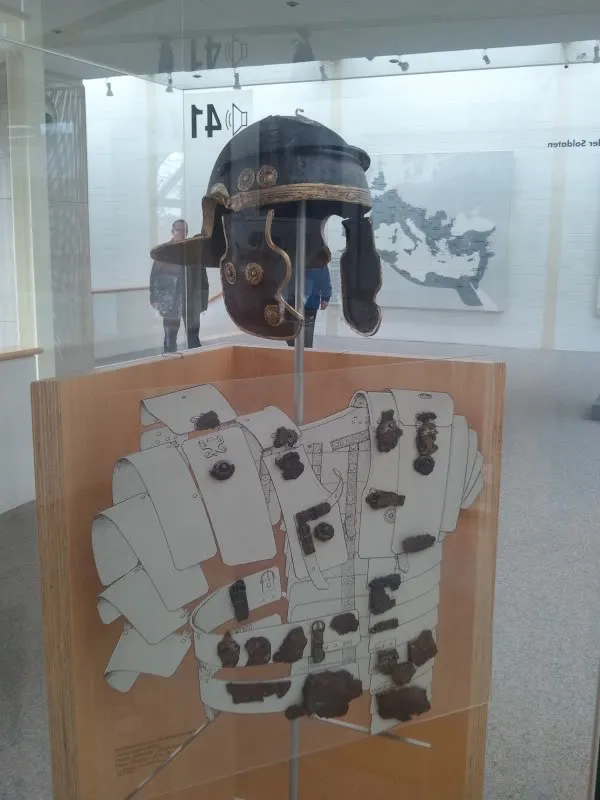
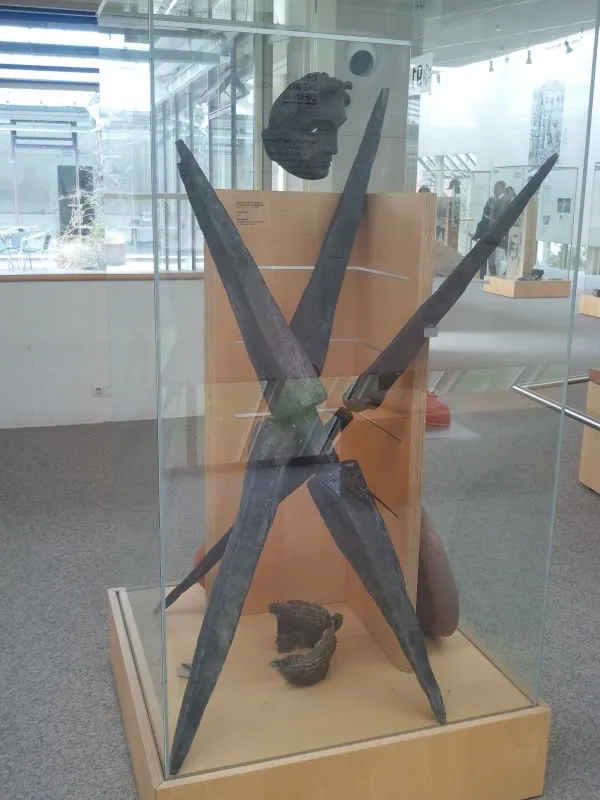
Parts of a Roman Armour.


A portable fortification, or barrier.


The only box with restraints - interesting, nevertheless.


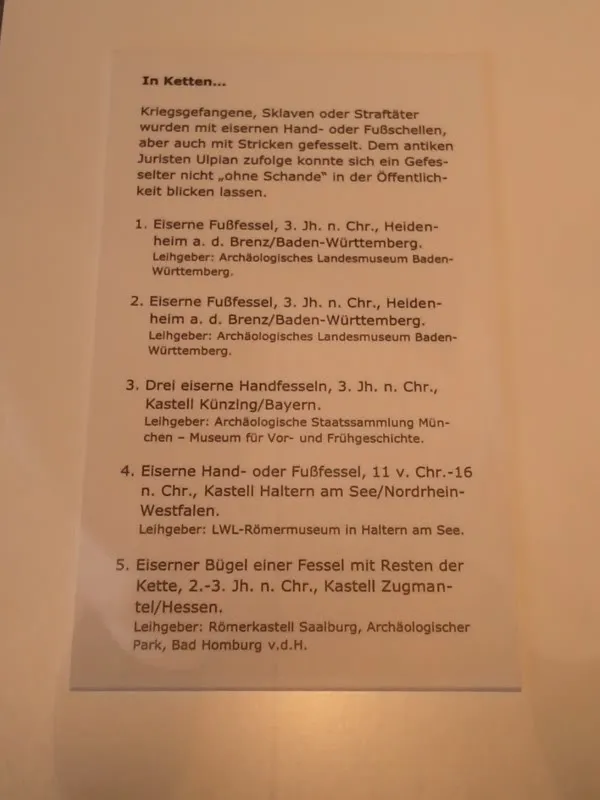
close-up of a leg iron


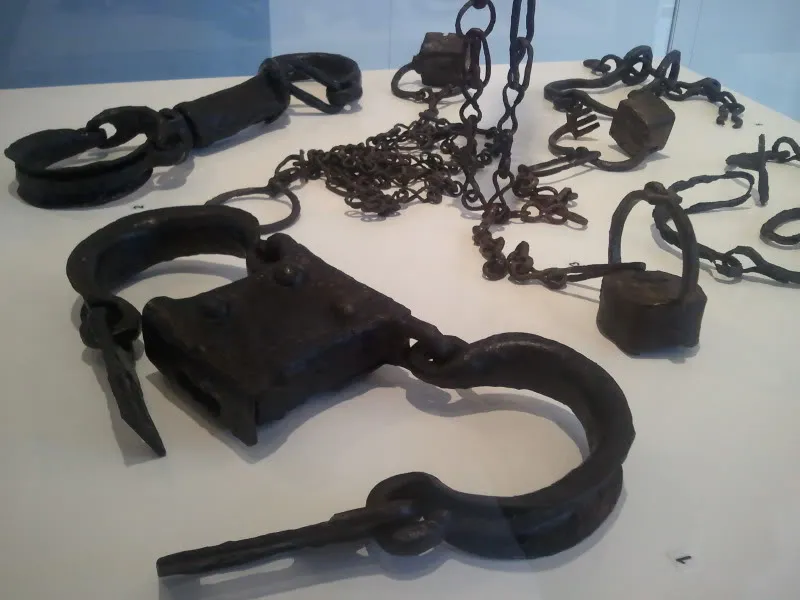
wrist shackle


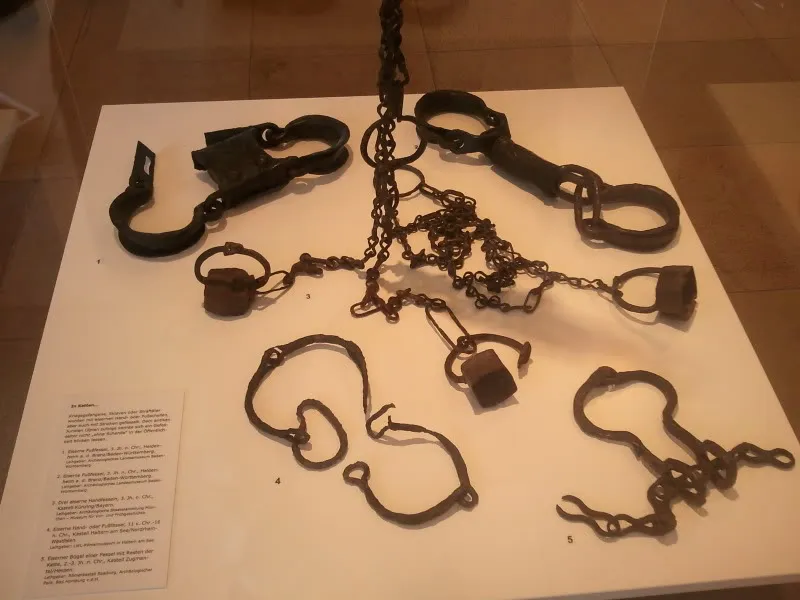
a gang chain with 3 wrist shackles


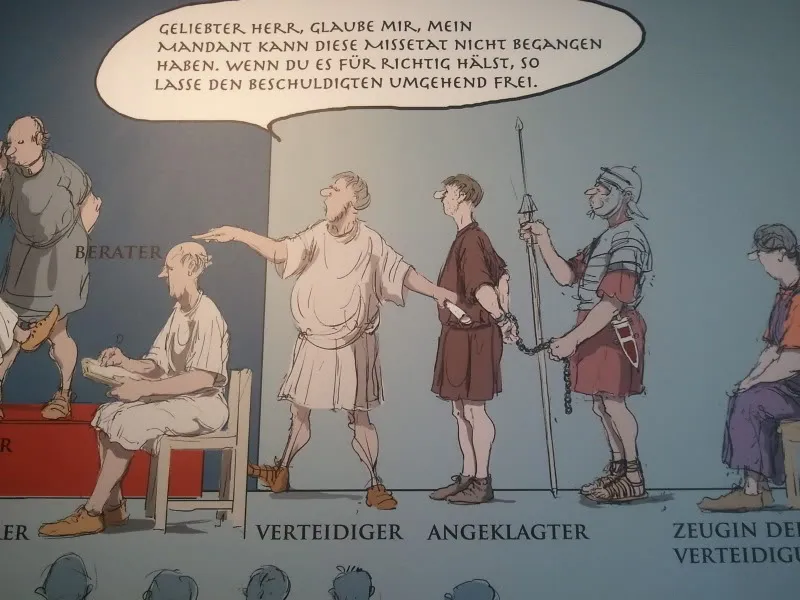
A description of a court of law in Roman times. "Believe me, Master, the defendant can not have committed the crime."


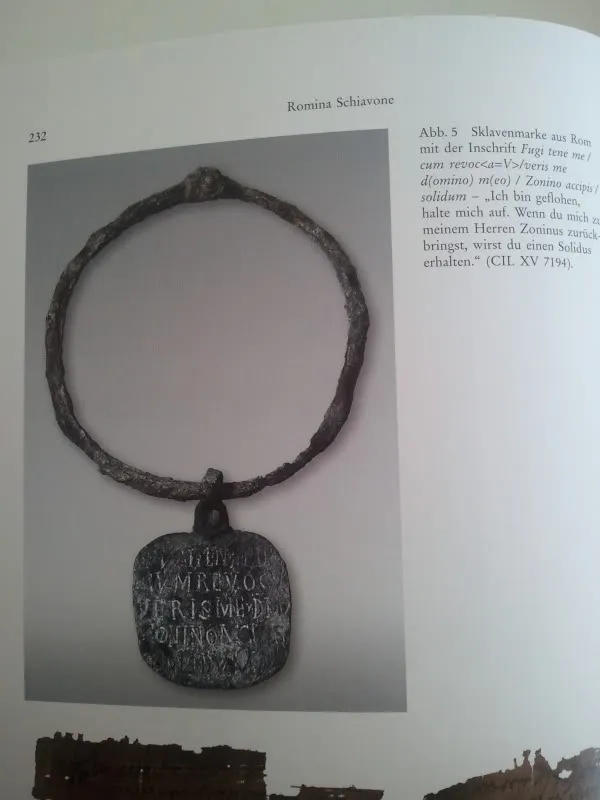
Not present, but taken from a catalog: a runaway slave collar. "I have run away. Return me to my master, and receive a reward."


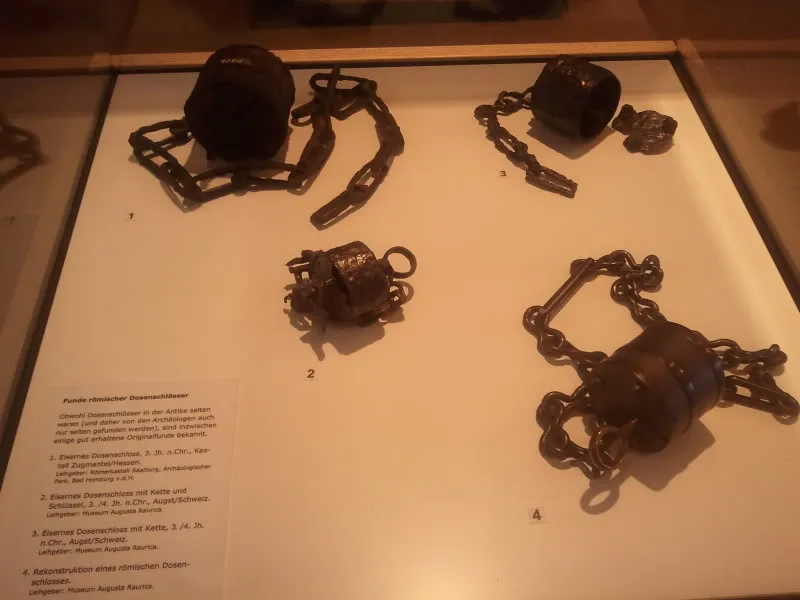
Roman "drum locks"


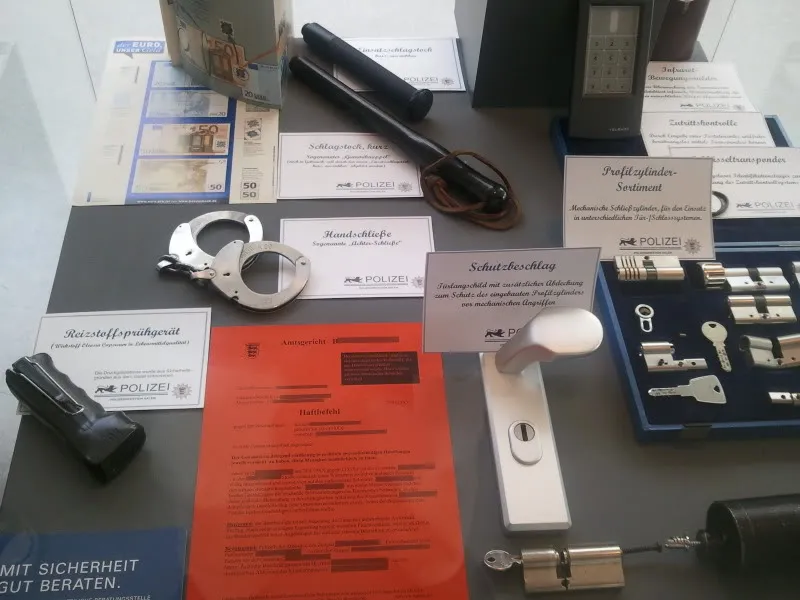
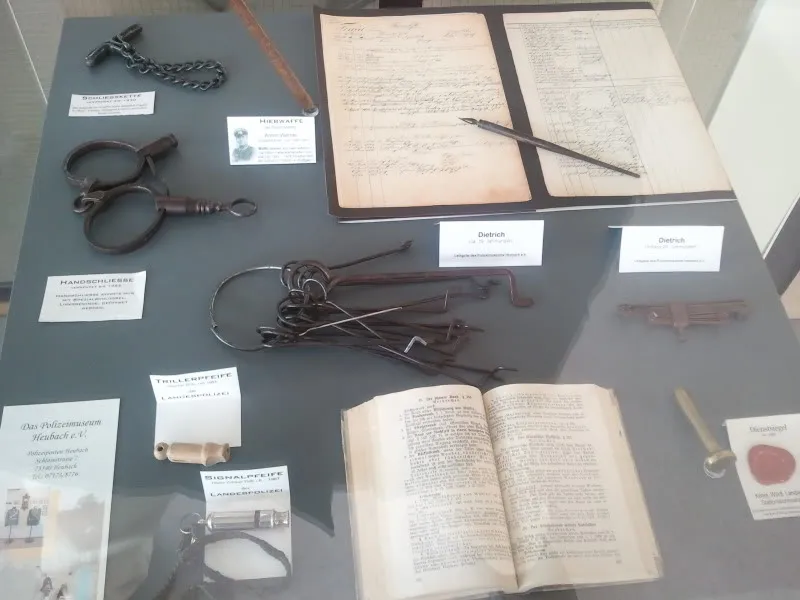
The local police also gave some items for display, among those some Clejusos.


The Stotz was used until 1962, the text says.

grenchat 09 Apr 2012
#2
An absolutely gorgeous display!

The ancient Roman barbed spring lock/shackle design is always of interest to me. They still use this design with many ornate brass and copper padlocks made in parts of China.

The depiction of the accused peasant being led before the magistrate by the centurion is also priceless.

Thanks for sharing!


Anonymous 09 Apr 2012
#3
Dear all,

we took the opportunity of a trip to my wife's family to visit to the Roman Museum in Aalen, South Western Germany.

http://www.museen-aalen.de/sixcms/detai ... reich=1599

The museum is built next to an excavated Roman fort. As luck would have it, they currently have an exhibit "Crime in ancient times", which displayed some bent locks (opened by intruders), but also locking chests, shackles and handcuffs.

Kind regards,
Nils


Here are some of the exhibits:


The museum.


The classic "Beware of the Dog" (cave canem)


Parts of a Roman Armour.


A portable fortification, or barrier.


The only box with restraints - interesting, nevertheless.


close-up of a leg iron


wrist shackle


a gang chain with 3 wrist shackles


A description of a court of law in Roman times. "Believe me, Master, the defendant can not have committed the crime."


Not present, but taken from a catalog: a runaway slave collar. "I have run away. Return me to my master, and receive a reward."


Roman "drum locks"


The local police also gave some items for display, among those some Clejusos.


The Stotz was used until 1962, the text says.
Click to expand...
Hi Nils,
Can you supply any descriptions of the item which appears in pictures 7, 9 and 11?

As there are often referred to as animal hobbles, I would like to know what the associates at the museum say about these. The drum locks are interesting too. I have never heard of these.

Also, I wonder if you took any pictures of the chests you mentioned. Can you post a pic or two if you snapped any?

Very nice!


mark
O--O
Steve Santini 09 Apr 2012
#4
Dear all,

we took the opportunity of a trip to my wife's family to visit to the Roman Museum in Aalen, South Western Germany.

http://www.museen-aalen.de/sixcms/detai ... reich=1599

The museum is built next to an excavated Roman fort. As luck would have it, they currently have an exhibit "Crime in ancient times", which displayed some bent locks (opened by intruders), but also locking chests, shackles and handcuffs.

Kind regards,
Nils


Here are some of the exhibits:


The museum.


The classic "Beware of the Dog" (cave canem)


Parts of a Roman Armour.


A portable fortification, or barrier.


The only box with restraints - interesting, nevertheless.


close-up of a leg iron


wrist shackle


a gang chain with 3 wrist shackles


A description of a court of law in Roman times. "Believe me, Master, the defendant can not have committed the crime."


Not present, but taken from a catalog: a runaway slave collar. "I have run away. Return me to my master, and receive a reward."


Roman "drum locks"


The local police also gave some items for display, among those some Clejusos.


The Stotz was used until 1962, the text says.
Click to expand...
A wonderful collection very well displayed.

Thank you for posting these pics.

I particularly like the fetter box. There is a medieval version of this for hands and feet on display in Rothenburg.

Cheers, Steve

grenchat 09 Apr 2012
#5
Dear all,

we took the opportunity of a trip to my wife's family to visit to the Roman Museum in Aalen, South Western Germany.

http://www.museen-aalen.de/sixcms/detai ... reich=1599

The museum is built next to an excavated Roman fort. As luck would have it, they currently have an exhibit "Crime in ancient times", which displayed some bent locks (opened by intruders), but also locking chests, shackles and handcuffs.

Kind regards,
Nils


Here are some of the exhibits:


The museum.


The classic "Beware of the Dog" (cave canem)


Parts of a Roman Armour.


A portable fortification, or barrier.


The only box with restraints - interesting, nevertheless.


close-up of a leg iron


wrist shackle


a gang chain with 3 wrist shackles


A description of a court of law in Roman times. "Believe me, Master, the defendant can not have committed the crime."


Not present, but taken from a catalog: a runaway slave collar. "I have run away. Return me to my master, and receive a reward."


Roman "drum locks"


The local police also gave some items for display, among those some Clejusos.


The Stotz was used until 1962, the text says.
Click to expand...
That fetter box bears an uncanny resemblance to the legendary Bean Giant. Perhaps it was used to defeat the handcuff emperors of the day.

It does appear that they mixed in a pair of common beastie hobbles with the human restraints. The curator might not have been able to discern, or may have just included them because they were excavated from the same site.


Steve Santini 09 Apr 2012
#6
Dear all,

we took the opportunity of a trip to my wife's family to visit to the Roman Museum in Aalen, South Western Germany.

http://www.museen-aalen.de/sixcms/detai ... reich=1599

The museum is built next to an excavated Roman fort. As luck would have it, they currently have an exhibit "Crime in ancient times", which displayed some bent locks (opened by intruders), but also locking chests, shackles and handcuffs.

Kind regards,
Nils


Here are some of the exhibits:


The museum.


The classic "Beware of the Dog" (cave canem)


Parts of a Roman Armour.


A portable fortification, or barrier.


The only box with restraints - interesting, nevertheless.


close-up of a leg iron


wrist shackle


a gang chain with 3 wrist shackles


A description of a court of law in Roman times. "Believe me, Master, the defendant can not have committed the crime."


Not present, but taken from a catalog: a runaway slave collar. "I have run away. Return me to my master, and receive a reward."


Roman "drum locks"


The local police also gave some items for display, among those some Clejusos.


The Stotz was used until 1962, the text says.
Click to expand...
Are bonafide legit ankle restraints.

Certainly similiar things were made for animals throughout history but they were also very much made for humans.

Same shape and same function. Namely, restraint.

S.S.
Mark Lyons 10 Apr 2012
#7
Dear all,

we took the opportunity of a trip to my wife's family to visit to the Roman Museum in Aalen, South Western Germany.

http://www.museen-aalen.de/sixcms/detai ... reich=1599

The museum is built next to an excavated Roman fort. As luck would have it, they currently have an exhibit "Crime in ancient times", which displayed some bent locks (opened by intruders), but also locking chests, shackles and handcuffs.

Kind regards,
Nils


Here are some of the exhibits:


The museum.


The classic "Beware of the Dog" (cave canem)


Parts of a Roman Armour.


A portable fortification, or barrier.


The only box with restraints - interesting, nevertheless.


close-up of a leg iron


wrist shackle


a gang chain with 3 wrist shackles


A description of a court of law in Roman times. "Believe me, Master, the defendant can not have committed the crime."


Not present, but taken from a catalog: a runaway slave collar. "I have run away. Return me to my master, and receive a reward."


Roman "drum locks"


The local police also gave some items for display, among those some Clejusos.


The Stotz was used until 1962, the text says.
Click to expand...
Steve,
This I don't understand.
An animal can't figure out how to release the cuffs and has no dexterity in which to do so.
A person can just release him/her self. Unless there is a lock incorporated into this, how can it be used as a restraint?

mark
O--O
Steve Santini 10 Apr 2012
#8
Dear all,

we took the opportunity of a trip to my wife's family to visit to the Roman Museum in Aalen, South Western Germany.

http://www.museen-aalen.de/sixcms/detai ... reich=1599

The museum is built next to an excavated Roman fort. As luck would have it, they currently have an exhibit "Crime in ancient times", which displayed some bent locks (opened by intruders), but also locking chests, shackles and handcuffs.

Kind regards,
Nils


Here are some of the exhibits:


The museum.


The classic "Beware of the Dog" (cave canem)


Parts of a Roman Armour.


A portable fortification, or barrier.


The only box with restraints - interesting, nevertheless.


close-up of a leg iron


wrist shackle


a gang chain with 3 wrist shackles


A description of a court of law in Roman times. "Believe me, Master, the defendant can not have committed the crime."


Not present, but taken from a catalog: a runaway slave collar. "I have run away. Return me to my master, and receive a reward."


Roman "drum locks"


The local police also gave some items for display, among those some Clejusos.


The Stotz was used until 1962, the text says.
Click to expand...
Old Roman and even Egyptian illustrations show slaves and prisoners of war being led hands bound to throats with cords and feet fettered.

That is how it would work.

Can't reach the feet can't undo the shackles.

Cheers, Steve
Nils 10 Apr 2012
#9
Dear all,

we took the opportunity of a trip to my wife's family to visit to the Roman Museum in Aalen, South Western Germany.

http://www.museen-aalen.de/sixcms/detai ... reich=1599

The museum is built next to an excavated Roman fort. As luck would have it, they currently have an exhibit "Crime in ancient times", which displayed some bent locks (opened by intruders), but also locking chests, shackles and handcuffs.

Kind regards,
Nils


Here are some of the exhibits:


The museum.


The classic "Beware of the Dog" (cave canem)


Parts of a Roman Armour.


A portable fortification, or barrier.


The only box with restraints - interesting, nevertheless.


close-up of a leg iron


wrist shackle


a gang chain with 3 wrist shackles


A description of a court of law in Roman times. "Believe me, Master, the defendant can not have committed the crime."


Not present, but taken from a catalog: a runaway slave collar. "I have run away. Return me to my master, and receive a reward."


Roman "drum locks"


The local police also gave some items for display, among those some Clejusos.


The Stotz was used until 1962, the text says.
Click to expand...
Sorry, I have no further photos of the boxes or locks. There is a catalog available for 20 euros at the museum, it's about 200 pages, but I believe it was only available in German.

Using metal, which was quite difficult to produce and expensive at the time, to restrain animals does not make a lot of sense to me. As far as I could discern it, each of the cuffs on display was either threaded onto a chain, or came with a locking mechanism.

The signs say either "hand-" or "leg restraint" (Fuß-). Sometimes it seems they weren't able to figure out which was which, or if it could be used for both.

I have one more photo of a recreated legionary outfit, proably around 1 AD (as there is no year 0).

Anonymous3x 10 Apr 2012
#10
Dear all,

we took the opportunity of a trip to my wife's family to visit to the Roman Museum in Aalen, South Western Germany.

http://www.museen-aalen.de/sixcms/detai ... reich=1599

The museum is built next to an excavated Roman fort. As luck would have it, they currently have an exhibit "Crime in ancient times", which displayed some bent locks (opened by intruders), but also locking chests, shackles and handcuffs.

Kind regards,
Nils


Here are some of the exhibits:


The museum.


The classic "Beware of the Dog" (cave canem)


Parts of a Roman Armour.


A portable fortification, or barrier.


The only box with restraints - interesting, nevertheless.


close-up of a leg iron


wrist shackle


a gang chain with 3 wrist shackles


A description of a court of law in Roman times. "Believe me, Master, the defendant can not have committed the crime."


Not present, but taken from a catalog: a runaway slave collar. "I have run away. Return me to my master, and receive a reward."


Roman "drum locks"


The local police also gave some items for display, among those some Clejusos.


The Stotz was used until 1962, the text says.
Click to expand...
Nils, any idea of the weight on the chain mail suit this fellow is wearing?

Best regards.
grenchat 10 Apr 2012
#11
Dear all,

we took the opportunity of a trip to my wife's family to visit to the Roman Museum in Aalen, South Western Germany.

http://www.museen-aalen.de/sixcms/detai ... reich=1599

The museum is built next to an excavated Roman fort. As luck would have it, they currently have an exhibit "Crime in ancient times", which displayed some bent locks (opened by intruders), but also locking chests, shackles and handcuffs.

Kind regards,
Nils


Here are some of the exhibits:


The museum.


The classic "Beware of the Dog" (cave canem)


Parts of a Roman Armour.


A portable fortification, or barrier.


The only box with restraints - interesting, nevertheless.


close-up of a leg iron


wrist shackle


a gang chain with 3 wrist shackles


A description of a court of law in Roman times. "Believe me, Master, the defendant can not have committed the crime."


Not present, but taken from a catalog: a runaway slave collar. "I have run away. Return me to my master, and receive a reward."


Roman "drum locks"


The local police also gave some items for display, among those some Clejusos.


The Stotz was used until 1962, the text says.
Click to expand...
Thank you for all the great photos, Nils!

"Using metal, which was quite difficult to produce and expensive at the time, to restrain animals does not make a lot of sense to me. As far as I could discern it, each of the cuffs on display was either threaded onto a chain, or came with a locking mechanism."

When I visited Rome, I was surprised at all the iron lattice work that was revealed by missing or partially eroded stones on the Colosseum (c70 A.D.) and other antiquated structures. While difficult to produce, foundries were excavated all throughout Europe and slaves were abundant in those times. I think that the reason we find so many more non-locking animal hobbles than actual slave/prisoner irons is due to the inherent difficulty and danger of trying to tether the hoofs of a burro or other domestic beast. As Steve points out, same shape, same function, though in the case of being used for human restraint, must be used in conjunction with wrist to neck tethering.

Regards,
Jason


Unknown / guest 10 Apr 2012
#12
Dear all,

we took the opportunity of a trip to my wife's family to visit to the Roman Museum in Aalen, South Western Germany.

http://www.museen-aalen.de/sixcms/detai ... reich=1599

The museum is built next to an excavated Roman fort. As luck would have it, they currently have an exhibit "Crime in ancient times", which displayed some bent locks (opened by intruders), but also locking chests, shackles and handcuffs.

Kind regards,
Nils


Here are some of the exhibits:


The museum.


The classic "Beware of the Dog" (cave canem)


Parts of a Roman Armour.


A portable fortification, or barrier.


The only box with restraints - interesting, nevertheless.


close-up of a leg iron


wrist shackle


a gang chain with 3 wrist shackles


A description of a court of law in Roman times. "Believe me, Master, the defendant can not have committed the crime."


Not present, but taken from a catalog: a runaway slave collar. "I have run away. Return me to my master, and receive a reward."


Roman "drum locks"


The local police also gave some items for display, among those some Clejusos.


The Stotz was used until 1962, the text says.
Click to expand...
**edit (the afore passage should have read eroded concrete)
Nils 29 Aug 2012
#13
Dear all,

we took the opportunity of a trip to my wife's family to visit to the Roman Museum in Aalen, South Western Germany.

http://www.museen-aalen.de/sixcms/detai ... reich=1599

The museum is built next to an excavated Roman fort. As luck would have it, they currently have an exhibit "Crime in ancient times", which displayed some bent locks (opened by intruders), but also locking chests, shackles and handcuffs.

Kind regards,
Nils


Here are some of the exhibits:


The museum.


The classic "Beware of the Dog" (cave canem)


Parts of a Roman Armour.


A portable fortification, or barrier.


The only box with restraints - interesting, nevertheless.


close-up of a leg iron


wrist shackle


a gang chain with 3 wrist shackles


A description of a court of law in Roman times. "Believe me, Master, the defendant can not have committed the crime."


Not present, but taken from a catalog: a runaway slave collar. "I have run away. Return me to my master, and receive a reward."


Roman "drum locks"


The local police also gave some items for display, among those some Clejusos.


The Stotz was used until 1962, the text says.
Click to expand...
I was recently able to add these Roman shackles to the collection. No locks. But it's eerie how well they fit over wrists after 2000 years. One looks like a baggage lock, I just hope it isn't.

Nils


LK 30 Aug 2012
#14
Dear all,

we took the opportunity of a trip to my wife's family to visit to the Roman Museum in Aalen, South Western Germany.

http://www.museen-aalen.de/sixcms/detai ... reich=1599

The museum is built next to an excavated Roman fort. As luck would have it, they currently have an exhibit "Crime in ancient times", which displayed some bent locks (opened by intruders), but also locking chests, shackles and handcuffs.

Kind regards,
Nils


Here are some of the exhibits:


The museum.


The classic "Beware of the Dog" (cave canem)


Parts of a Roman Armour.


A portable fortification, or barrier.


The only box with restraints - interesting, nevertheless.


close-up of a leg iron


wrist shackle


a gang chain with 3 wrist shackles


A description of a court of law in Roman times. "Believe me, Master, the defendant can not have committed the crime."


Not present, but taken from a catalog: a runaway slave collar. "I have run away. Return me to my master, and receive a reward."


Roman "drum locks"


The local police also gave some items for display, among those some Clejusos.


The Stotz was used until 1962, the text says.
Click to expand...
very nice NILS thanks for the great photos
bet you wish you could have smuggled in a glass cutter!

LK D~D
Steve_Mollett 30 Aug 2012
#15
Dear all,

we took the opportunity of a trip to my wife's family to visit to the Roman Museum in Aalen, South Western Germany.

http://www.museen-aalen.de/sixcms/detai ... reich=1599

The museum is built next to an excavated Roman fort. As luck would have it, they currently have an exhibit "Crime in ancient times", which displayed some bent locks (opened by intruders), but also locking chests, shackles and handcuffs.

Kind regards,
Nils


Here are some of the exhibits:


The museum.


The classic "Beware of the Dog" (cave canem)


Parts of a Roman Armour.


A portable fortification, or barrier.


The only box with restraints - interesting, nevertheless.


close-up of a leg iron


wrist shackle


a gang chain with 3 wrist shackles


A description of a court of law in Roman times. "Believe me, Master, the defendant can not have committed the crime."


Not present, but taken from a catalog: a runaway slave collar. "I have run away. Return me to my master, and receive a reward."


Roman "drum locks"


The local police also gave some items for display, among those some Clejusos.


The Stotz was used until 1962, the text says.
Click to expand...
In addition, many shackles were 'locked' by the simple expedient of using an iron ring, hammered closed after being placed on the irons.
Nils 30 Aug 2012
#16
Dear all,

we took the opportunity of a trip to my wife's family to visit to the Roman Museum in Aalen, South Western Germany.

http://www.museen-aalen.de/sixcms/detai ... reich=1599

The museum is built next to an excavated Roman fort. As luck would have it, they currently have an exhibit "Crime in ancient times", which displayed some bent locks (opened by intruders), but also locking chests, shackles and handcuffs.

Kind regards,
Nils


Here are some of the exhibits:


The museum.


The classic "Beware of the Dog" (cave canem)


Parts of a Roman Armour.


A portable fortification, or barrier.


The only box with restraints - interesting, nevertheless.


close-up of a leg iron


wrist shackle


a gang chain with 3 wrist shackles


A description of a court of law in Roman times. "Believe me, Master, the defendant can not have committed the crime."


Not present, but taken from a catalog: a runaway slave collar. "I have run away. Return me to my master, and receive a reward."


Roman "drum locks"


The local police also gave some items for display, among those some Clejusos.


The Stotz was used until 1962, the text says.
Click to expand...
Well, of course I paced all the distances, noted down the alarm system and right now I'm assembling my crew ...

Boy, there are some places where I'd wished for a class cutter! The police Museum in Miami would be one of them, but then that would be a bad idea to start, I suppose.

Nils 16 Dec 2012
#17
Dear all,

we took the opportunity of a trip to my wife's family to visit to the Roman Museum in Aalen, South Western Germany.

http://www.museen-aalen.de/sixcms/detai ... reich=1599

The museum is built next to an excavated Roman fort. As luck would have it, they currently have an exhibit "Crime in ancient times", which displayed some bent locks (opened by intruders), but also locking chests, shackles and handcuffs.

Kind regards,
Nils


Here are some of the exhibits:


The museum.


The classic "Beware of the Dog" (cave canem)


Parts of a Roman Armour.


A portable fortification, or barrier.


The only box with restraints - interesting, nevertheless.


close-up of a leg iron


wrist shackle


a gang chain with 3 wrist shackles


A description of a court of law in Roman times. "Believe me, Master, the defendant can not have committed the crime."


Not present, but taken from a catalog: a runaway slave collar. "I have run away. Return me to my master, and receive a reward."


Roman "drum locks"


The local police also gave some items for display, among those some Clejusos.


The Stotz was used until 1962, the text says.
Click to expand...
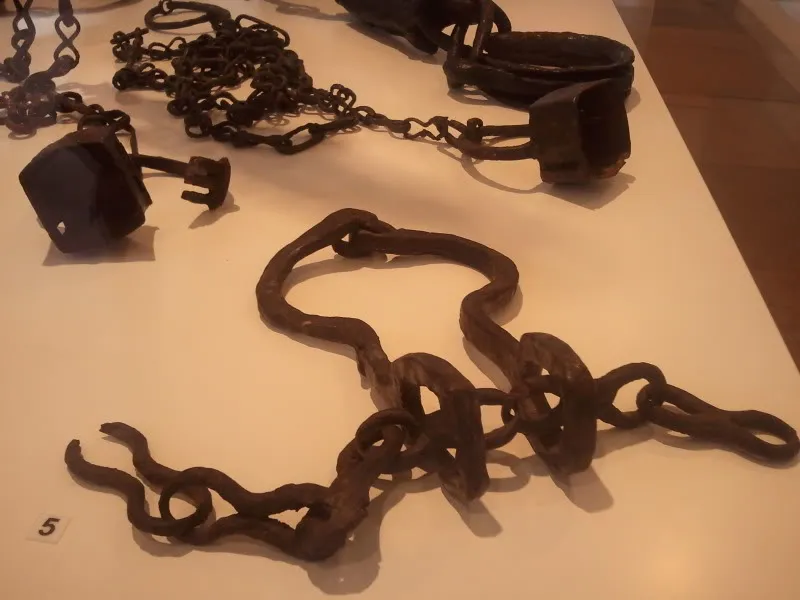
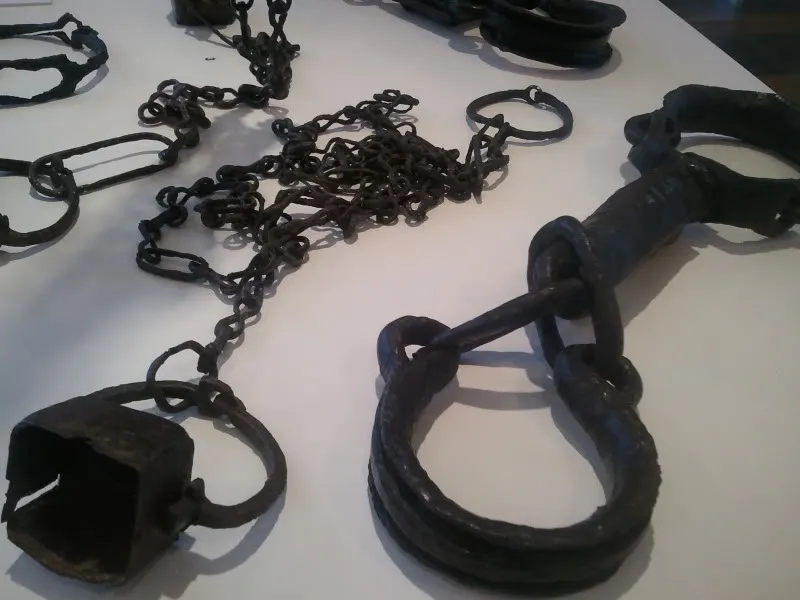
And some more Roman shackles, this time from the Archaeological Museum in Munich.

This first is a real double handcuff, in the classical sense of the word, the second and third photo are a chain gang (so called Künzing-type, as far as I know). The workmanship is amazing; it also shows in the second item that metal was not a resource to be wasted, and that it was solid enough even 2000 years ago.

Nils