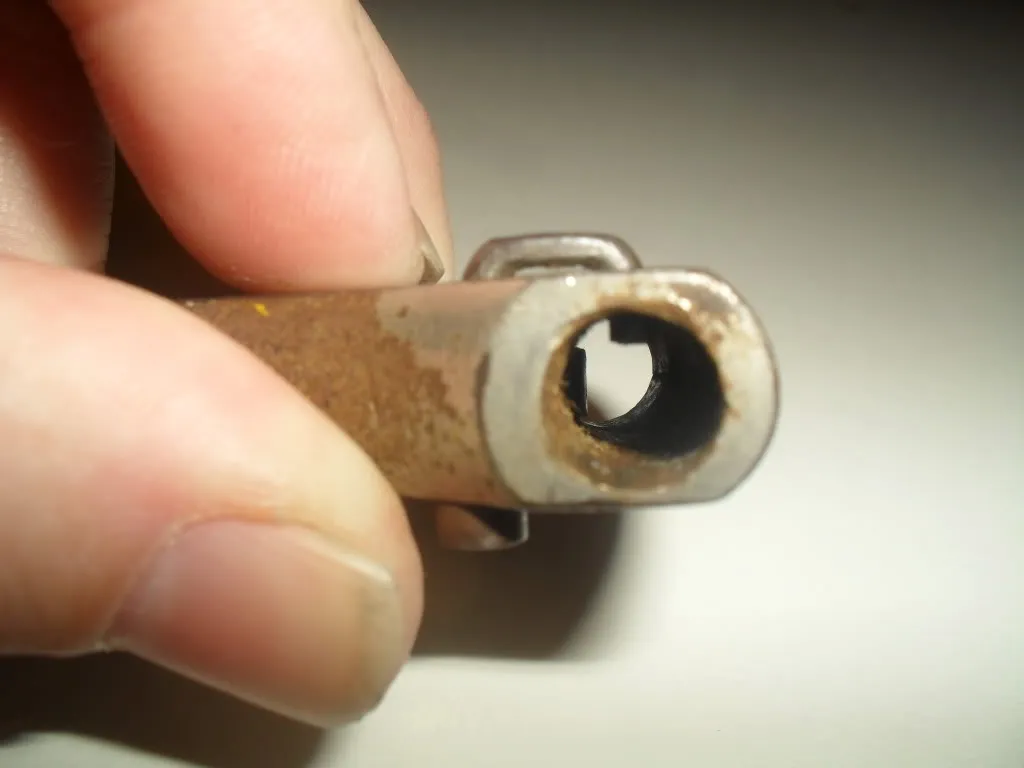
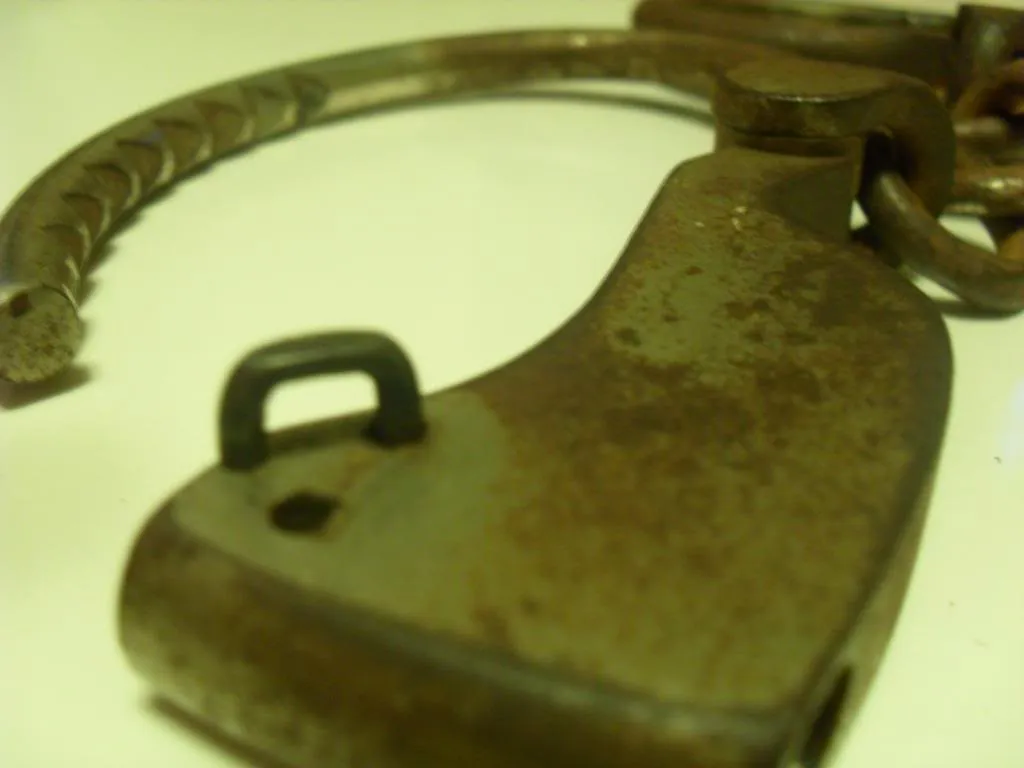
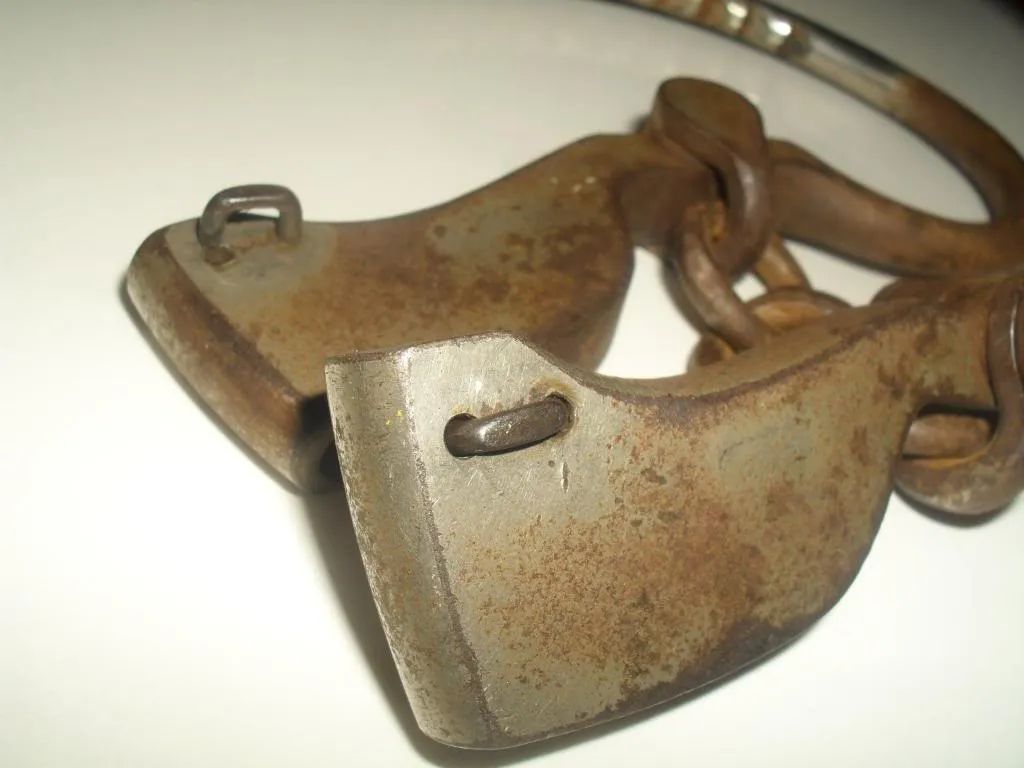
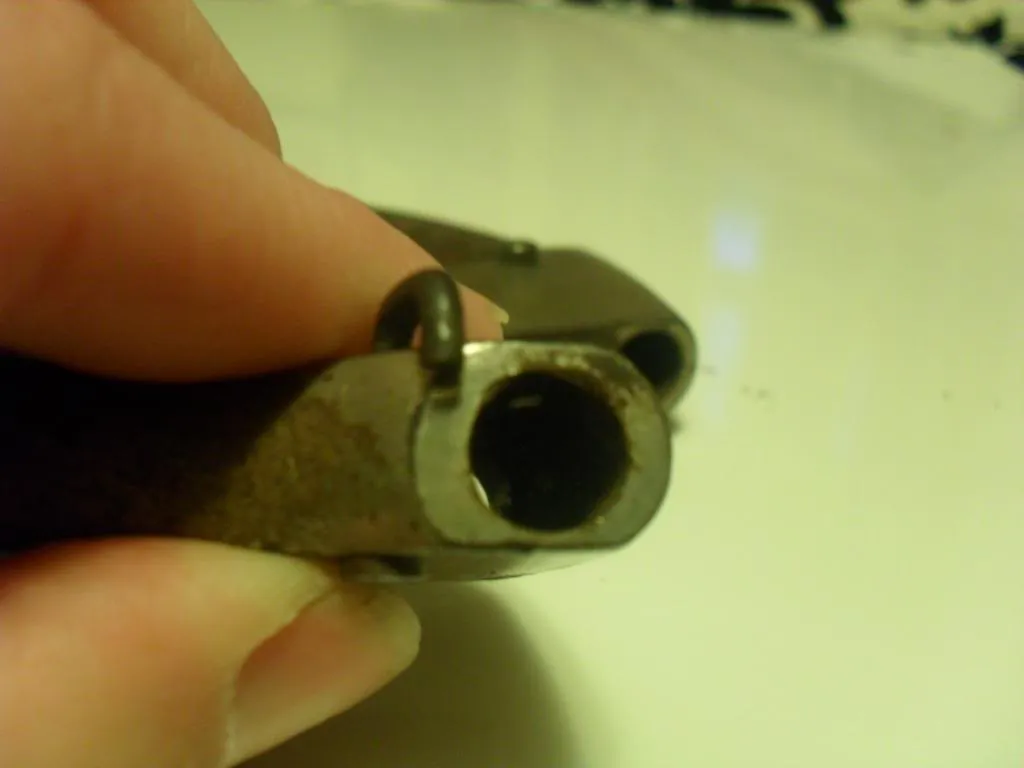
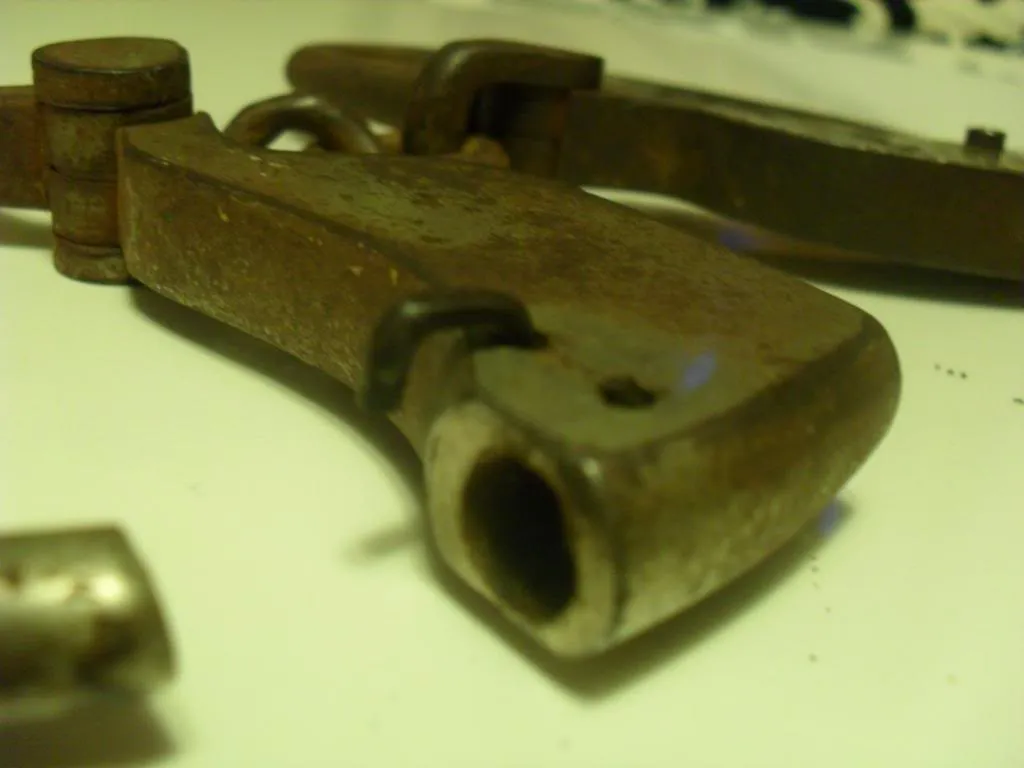
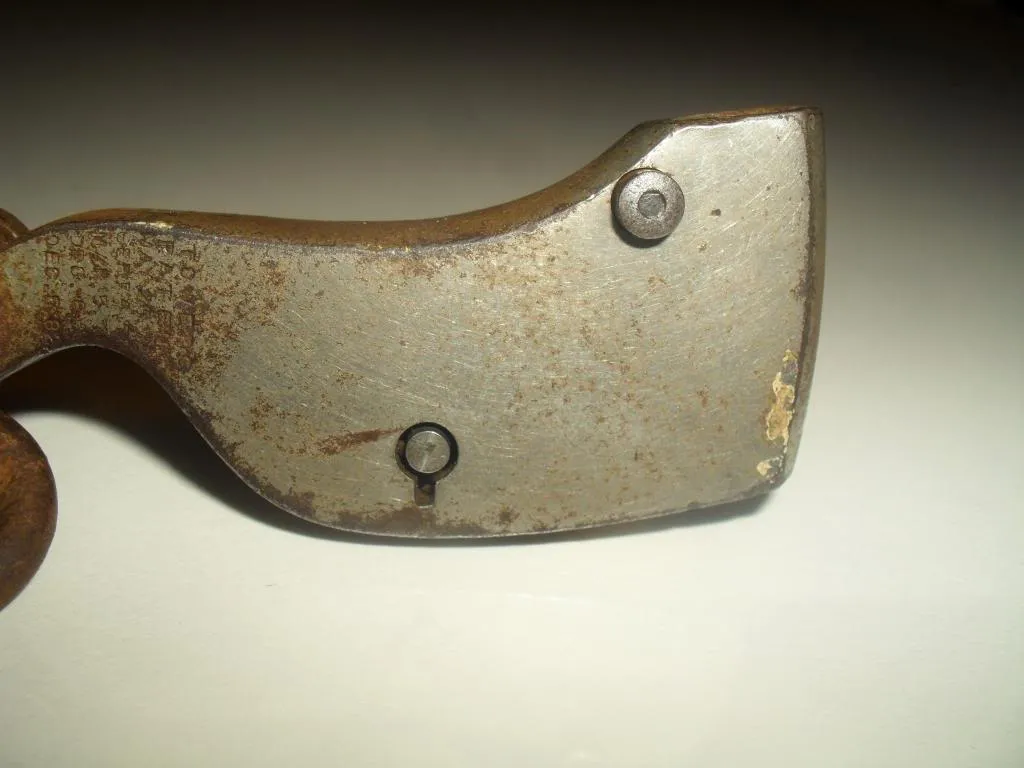
Ok. Here are a pair of Towers I came across that have a very unusual spring loaded anti lock mechanism. The button pushes out a hook shaped stop that prevents the bow from entering the lock case deep enough to lock. To lock the cuff on a wrist, you have to push the button which moves the hook out of the way. The hook can also be pulled out and turned to rest on the lock case, which enables the bow to enter the case. I'm pretty sure these are factory made, since the spring and button mechanism are inside the lock case. Any ideas anyone?? Also, get ready to see some more now that I've worked out the photobucket riddle!
Thank you ARIOCHMAGICIAN for your answer, have found what I believe to be your model described in JOE'S info on TOWER found on he home page,below is the quote;
NOTE THE LAST PARAGRAPH !!!!
Tower Double Lock Handcuff with the Patent Stop
The "Patent Stop" Model. In 1882 E. D. Bean patented his first handcuff featuring a unique release button that locked the handcuff. This solved the problem of premature locking. In his patent application dated September 1, 1882, Bean stated:
"It often occurs in the attempt of a policeman to arrest and manacle an offender that the handcuff becomes in the struggle accidently closed and locked before the officer can succeed in placing it about his prisoner's wrist, and when this occurs it is a matter of time and difficulty to unlock the instrument, and more chance is afforded the offender to escape from the control of the officer.
The object of this invention is to prevent accidental or premature locking of a handcuff by providing it with a lock containing an adjustable stop controlled by a readily accessible thumb-knob, by means of which the latch or bolt of the lock is restrained from engaging the hasp until such time as the officer shall release them by pressure upon such said thumb-piece."
Just five days later on September 6, 1882 Henry W. Kahlke and John J. Tower responded with a patent application of their own. In it they claim that the Bean design is not reliable.
"Handcuffs and shackles usually shut with a spring-lock and sometimes a refractory prisoner will in his struggles force the bow of the shackle into is place before it is on his person. This necessitates the unlocking of the handcuff by the officer under very disadvantageous circumstances before he can put it on the prisoner. Efforts have been made to apply a stop in the lock or on the radius bar to prevent this; but the same is not reliable, and can be operated by the prisoner so as to be useless for the purpose intended.
Our present invention relates to a stop on the bow of the shackle, which stop is so placed that it allows the end of the bow to enter the opening in the radius-bar to prevent the bow becoming bent; but the stop prevents the bow passing in sufficiently far for the first notch to be caught by the spring-lock, so that the officer can open the bow the instant the same can be slipped over the prisoner's hand, and by an easy movement, as the bow is pushed into the lock, the stop is turned aside, and the bow close as far as necessary to secure the wrist."
The Tower patent offered three different designs for a bow stop. The design that was adopted was a direct spring loaded bow stop shown below. The two other designs were an inverted stop that catches the hole in the lock case with a hook and a ring about the bow that needed to be pressed into alignment for the bow to lock.