OnlyCuffsOnlyCuffsarchive search
The Forum at Handcuffs.Org

Known Fakes

15 visible archived posts · 15 preserved total · topic ID 6848
Original topic ↗Recovered images
djhalfdead 21 Dec 2019
#1
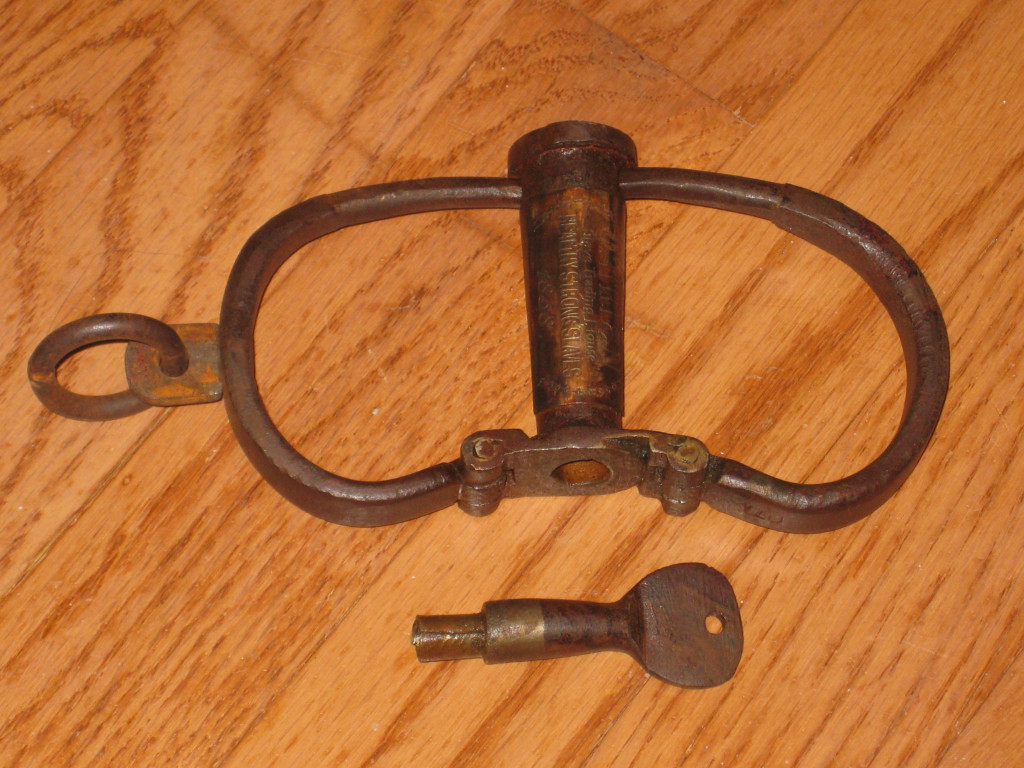
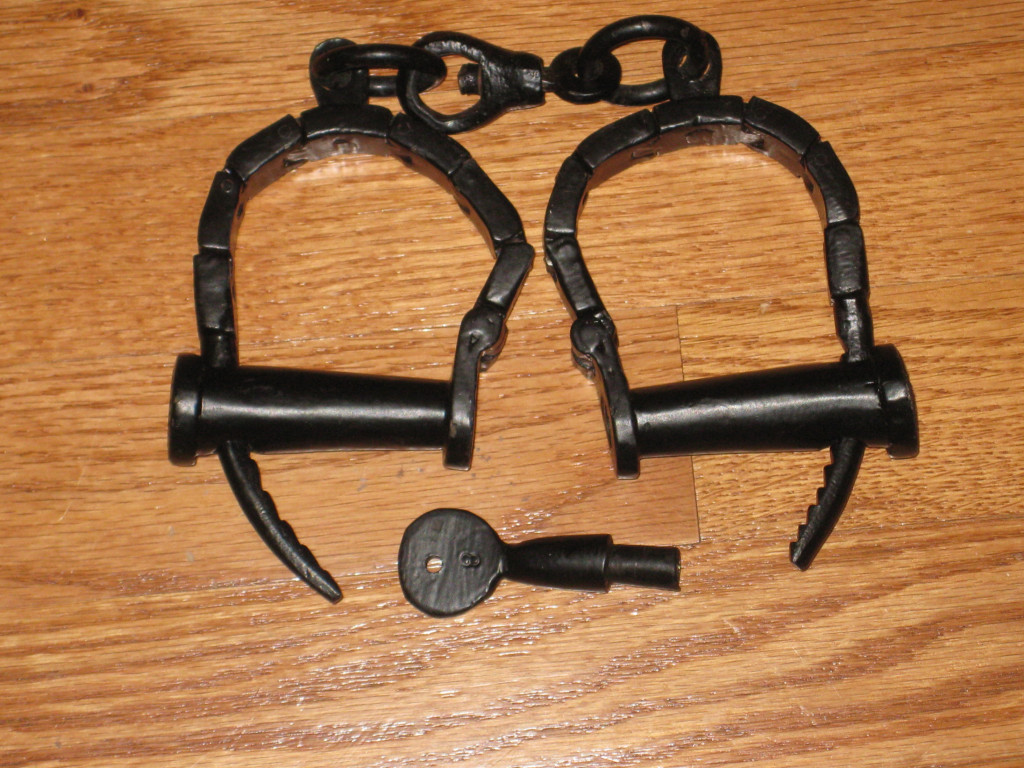
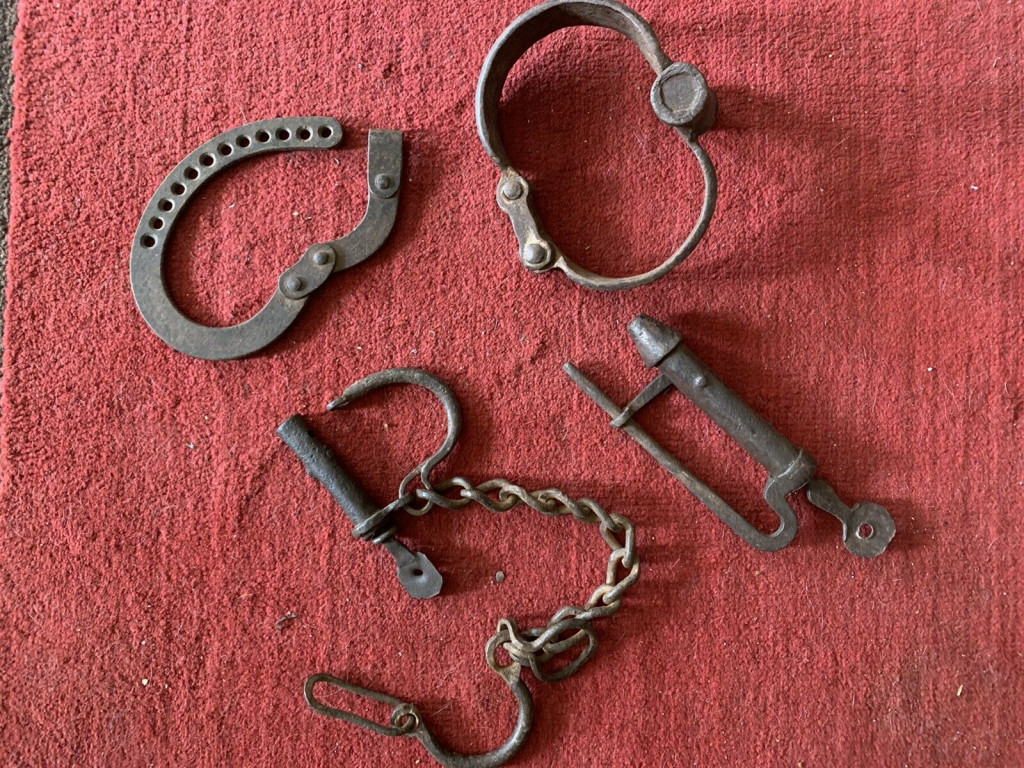
Hey guys, hope everyone s well. I wanted to see if we could get a topic going to showcase the known fakes in the handcuff collecting world. The cuffs that were recently made, but chemically altered to add "patina" and then sold as "authentic." I know there are multiple topics on here, that pertain to this. I would like to put together this thread so new guys to the collecting world, as well as so us us "seasoned" members can come to this one thread and see what to avoid out in the marketplace. Familiarize themselves of what to watch out for while out relic hunting. Just to make it easier to access this information. I know Mark Lyons had a page on Ebay that was put together to show some of the modern fakes and had a few hints and tricks to identify a cuff before buying it. I believe that page is gone now, though? I do buy fakes, to display in my collection and to use to show the difference from the real antiques to the junk pieces.  I will start out with a few.  Pic 1 is an Indian made, flexible Darby Style handcuff. Also modern made. It has a really thick layer of black paint on it. The 2nd pic is from Ebay. The auction is currently running with a starting price of $700! All of the restraints and the padlock in the pic are all fake. Likely, made in India, China, etc.  The third pic is also an Indian Fake form of a Darby Handcuff. Feel free to add your own pics of fakes or pics you find on the web that pertain to this topic.


-Richard Knip-
Unknown / guest 21 Dec 2019
#2
I also wanted to send out a huge thank you to Steve Santini and Ian McColl, for their help through the years, with identifying authenticity of cuffs i may have wanted to place a bid on at one time. They, both, have saved me from making a foolish mistake or two, in the past. We werent born knowing this stuff. We all learn from different sources. Steve and Ian are very knowledgeable when it comes to ancient and antique restraints.  I appreciate the help and the advice you have given me, through the years, fellas.
-Richard Knip-
ken10road 21 Dec 2019
#3
Hello,
I am a newbie but I have read that a great deal of fake stuff comes from Pakistan. If I am correct, but I am a newbie, I think Pakistan outdoes both China and India combined. I stand to be corrected.
Mike
Unknown / guest 21 Dec 2019
#4
Hello,
I want to concur about Ian McColl being of great help. He also put me on to Steve Santini for a couple of purchases. My collection is growing and I am much more confident than before "meeting" Ian.
Mike
djhalfdead 21 Dec 2019
#5
I believe Pakistan does exceed both countries in known fakes. I completely forgot about Pakistan, when i was naming top countries that were producers. I appreciate you adding that into the mix! Here is another fake, i added to my collection, knowing it was a fake and paying accordingly. Anytime a ball and chain pops up, if it has the name of the prison stamped into it, its going to be a fake.  This design with the two leg irons attached is stamped with "Yuma Territory Prison." They are also known to be stamped with famous prisons like Alcatraz and Leavenworth, to name a few examples.
-Richard Knip-
Known fakes 21 Dec 2019
#6
Richard that is a commendable undertaking on your part, I know that when I buy cuffs that I can’t personally examine first I proceed with extreme caution and try an ask relevant questions.

Spencer
ken10road 21 Dec 2019
#7
Hello,
I live in Vancouver and we receive a large number of refugees. I know 6 guys from Mumbai who came here as refugees because they were at variance with thegovernment officials in Mumbai. They were thrown into two jails in Mumbai. They were shackled with these so-called fakes. But in their cases, these shackles were not fake. They made them vulnerable in the vastly overcrowded jails to sexual predators. That is why they were shackled. This propels their families to come up th the bribed to get them out. Usually about $100 US. In many cases these leg irons don't work with the keys that the warden has and the family now has to pay for the leg irons and the prisoner walks out of the jail with them on. The family files them off. 
So, these shackles from India are not really fakes. They are the real thing.
I don't know why, but I was unable to correct some of this message, but I think it comes thru.
IAN L MCCOLL 22 Dec 2019
#8
The pair of Darby flexible (photo in OP) are a poor copy of the Indian made darby flexible which was a good piece (which I have own several over the years) The early Indian made copy  of the English flexible, most likely  and considered by most collectors of those during British rule. During the late 1970’s and 80’s antique dealers brought hundreds out of India and sold them in many Western countries. There seems to be a decline in supply during the 90’s. In the noughties and 10’s Indian and assumed Pakistan makers started producing great quantities of reproduction of the reproductions of the English models.
 
The original copies were skillfully handcrafted and fairly well made for manufacturing methods used. The lock tube, rolled from sheet metal was brazed along the seam. The Hinge was produced by folded a single piece over on itself and brazing it to the tube. The Swivel parts appear to be cast and were robust.
 
The more recent cuffs don’t have the handcrafted charm of the earlier, Thinner sheet metal appears to be used, riveting is unfinished, the swivels are flimsy and appear weak.
 
The photo of the double hand (wrist) cuff one the single lock tube is a fantasy cuff for a darby model.
 
These cuffs would only be produced because the are sales for these items. People like to own and collect interesting items and have something they can show off, use as a conversation people or like to make up their own fanciful story too.
 
The only time these items should be considered FAKES which I find a misused term is when they are marked to appear to be something or have providence that is not genuine.  Most of the time these items have been imported into a country to be sold by dealers or retailers. This is when a humble reproduction is sold as a definite fake with misleading or false descriptions.  When sold on auctions sites, the dealer will add “estate sale item” which then excuses them of any responsibility for any misleading or dishonest information about the item.
 
Personally, I like Indian made products and don’t judge  or  disparage the artisans who make them to earn themselves a living. What disgusts me most is the dishonesty of the retailers and auctioneers.  Here’s an example of one such case. https://alltribes.com/vintage-yuma-terr ... handcuffs/
(this post not proof read before publishing)
another day in Trumpville 22 Dec 2019
#9
honest sellers !! laughable https://www.icollector.com/Tower-Style- ... _i12197029                    MAKING  collecting GREAT AGAIN, don't let searchable facts get in the way of a good deceptive description.
djhalfdead 22 Dec 2019
#10
Granted, there will always be a factor of misrepresentation on the seller's perspective. Seller's often put a false story as to the origin of the cuffs, to help sell them for a higher value. Which is, of course, a practice in dishonesty. Perhaps i used the term, "fakes" to cover too broad of a spectrum of cuffs? A fake to me, is a newer made cuff that is patterned after an original cuff's design and chemically treated or painted to look older. I find it odd that these are used in prisons where they can be applied to ones legs, but that they do not have a key handy for removal upon release?  I tried to "snap" on several of the cuffs in my collection, without using a key to open them. The pakistan and indian made darbys, i have, will not "snap" on. Due to the shape and construction of the locking bolts, it is necessary to use the key to open the cuff to put them on someone. If you have to have the key to open them to apply them, then you should have the same key available when removing them upon release from the prison. Of course, that is IF the cuffs they use are the same as the ones shown in my collection. Perhaps the ones actually used by police and prisons and the ones that the cheaply made copies i have in my collection are made from? Not having any hands on knowledge any further than i do, i do not know for sure?
-Richard Knip-
IAN L MCCOLL 23 Dec 2019
#11
Half the cuff I have made have been FAKES by your definition, makes me feel soiled.
ken10road 23 Dec 2019
#12
Dear Richard,
The Indian Justice system is portrayed by Pulitzer Prize winner Katherine Boo in "behind the beautiful forevers." That is a famous trial. Also, GD Roberts wrote a couple of books, the first being Shantaram where he graphically describes Indian prisons. Four of the six that I mentioned vouch for Roberts' accuracy. As for your very logical questions about why the shackles weren't removed I talked to one of the guys and he says it is all a matter of corruption in that system. You have to bribe for everything. I assume you are probably correct, the staff probably could have removed them. My friend says it relates to humiliation. He is Muslim.
Mike
djhalfdead 23 Dec 2019
#13
Mike, thank you for the further explanation. The legal system in India doesnt seem like a system you would want to mess with! They are known for being pretty brutal.

Ian, the cuffs you made were not "fakes." The cuffs you made would be described as "replicas." That was the heading they were marketed and sold under. There is nothing wrong with a replica, as long as the buyer knows it a replica before placing an order. Now, we both know that some folks were not upfront about your replicas and tried to sell them as real, authentic (insert maker's name) cuffs. Which of course, is wrong to do so. Your replicas gave us all an opportunity to own cuffs that we may never have a chance to own, in our lifetime.  A perfect example was your beautiful replica of the Houdini Mirror cuff. None of us will ever get the chance to own the original, but, with your craftsmanship and skills, we could get a chance to own the closest thing. I never did order a Mirror Cuff from you. That is one that haunts me to this day! I will own one of your mirror cuffs, one day.
-Richard Knip-
RyanVaene 13 Jan 2020
#14
     I have found that most of the "fakes" or crudely made copies all have a similar key. While the details of the key vary a lot among the "real" makers of darby cuffs, ( Hiatt, RCS, Thompson, etc) the keys are well made and often include several "decorative" encircling rings below the top of the key.
     The "Indian, Pakistani" replicas, often sold misleadingly, lack the craftsmanship and quality of the original range of darby cuffs, and the keys are all the same conical cylinder shape, often poorly aligned, or slightly askew in regard to the axis of the key. While they are certainly up to the task of restraining someone, they are not well made, and the keys rarely operate smoothly.

Pakistani company KUB however makes excellent reproductions, sold as new, that could be considered collectible in their own right; every item I've got is very well made. Most are nickel plated brass, a few early pair were chromed, while some are stainless. They are available on several internet sites including handcuff warehouse.  The keys are well made, nearly the entire collection snaps shut, hinges are smooth, etc. There have been some changes over the year (generic stainless swivels instead of the nice old brass ones) and the use of thinner chain, probably as a cost saving measure.
grenchat 14 Jan 2020
#15
My very first Darby style cuff was a crudely made Indian adjustable model. In fact, these cuffs were so crudely made that one cuff couldn't even lock on the last position until I did some file work. All in all I was happy with my purchase as this was in the pre-e-commerce era, and my other sources for antique cuffs were asking more than I was willing to spend on commonly made genuine Darbies from the 1940's and '50s. These copies ran me only $10 with free shipping since I ordered lots of stuff from this mail order militaria outfit, and looked great in my display case. Often times guests that collected knives and swords asked to see the Indian Darbies and wanted to buy them for their display cases. When eBay became a popular venue for buying antiques, I acquired Hiatt, RCS, etc. at reasonable cost, so I auctioned off the Indian copies along with my many duplicates.

Over the years we've seen quite a few unscrupulous eBay sellers trying to pass off the replicas as genuine antiques. Even Hiatt began producing replicas, though these were made out of a cheap pot metal that were prone to stripped threaded bolts, etc.

Caveat Emptor,
Jason