lauher
#1The Topic for today: Sunday - Pre 1800's restraints from around the world
Here is the schedule for coming days. Take your pictures now.
18th Monday - Romer
19th Tuesday - Countries of the Former USSR
20th Wednesday - Froggatt
21st Thursday - Italy
22nd Friday - Clejuso
23rd Saturday Mattatuck, Maltby, and Judd
Nipper Madness Begins. A series of days devoted to nippers, grips and come-alongs.
24th Sunday - The US Patent List. How many can we find?
25th Monday - US Nippers - Not on the patent list, odd balls and copies.
26th Tuesday - British Nippers
27th Wednesday - European Nippers
28th Thursday - The Rest of the World
Pre 1800's restraints from around the world
Show us your oldest restraints, those likely made before 1800.
The age of manufactured restraints began in the late 17th century in Birmingham. Restraints made
earlier than 1800 are difficult to identify and to categorize. Let us see if we can make some order
out of the chaos.
I will start with the oldest cuff in my collection that has a definite provenance.
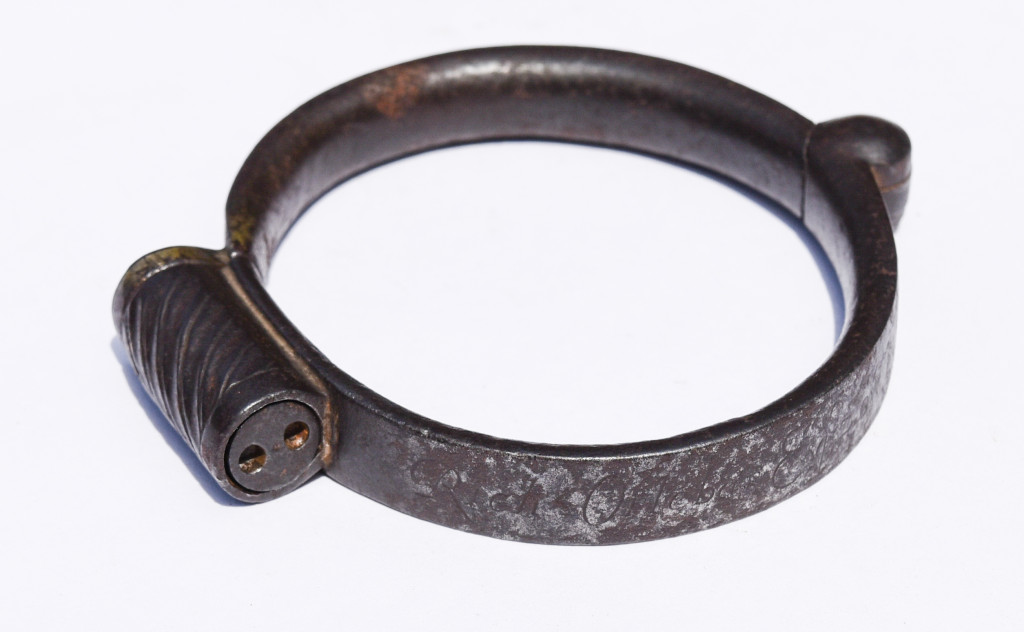
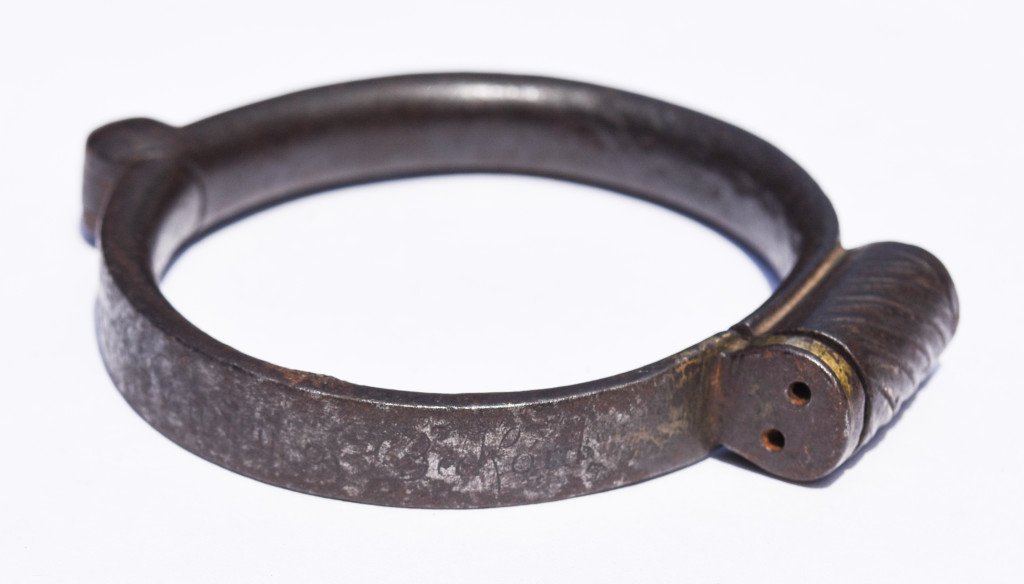
The Richard Orlebar Shackle
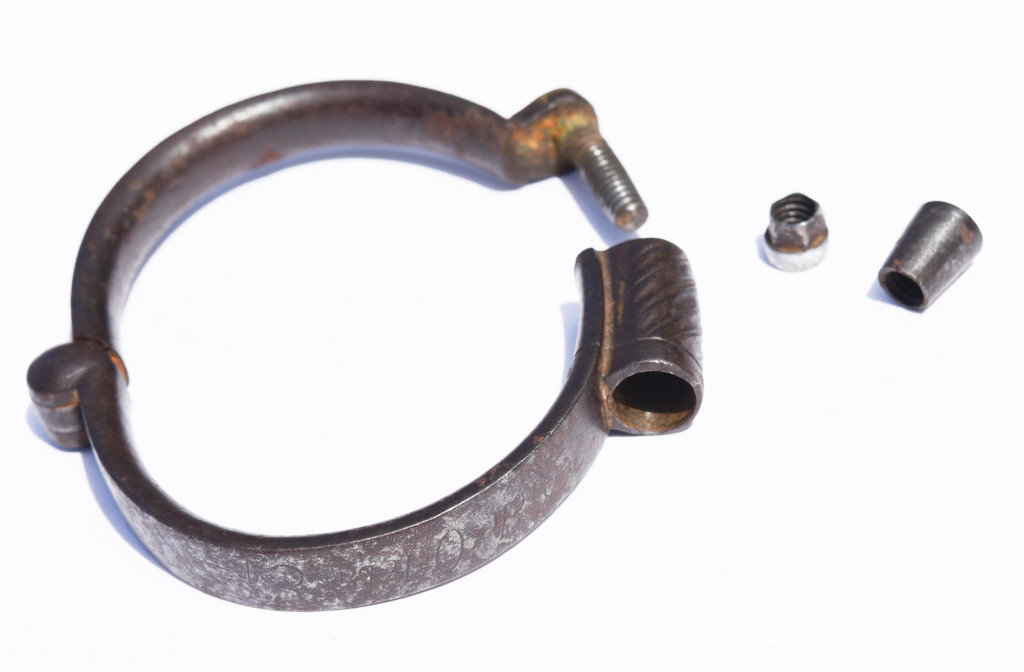
This ornate shackle was bought at auction a number of years ago. The English dealer said that is was found in the drawer of a Queen Anne desk.
The shackle was inscribed, "Rich Orlebar Esq. of Harrold of Bedford County."
Richard Orlebar of Harrold was easy to identify. An entire book devoted to the Orlebar family exists and I was able to locate a copy of the book.
Richard Orlebar was born circa 1648. He married Jane Hatton and in 1671 leased Harrold Hall, in the village of Harrold located in Bedfordshire.
http://harroldvillage.co.uk/harrold-his ... rold-hall/
Richard died in 1690. He had a son named Richard who became High Sheriff of Bedfordshire in 1721, but this second Richard did not live in Harrold.
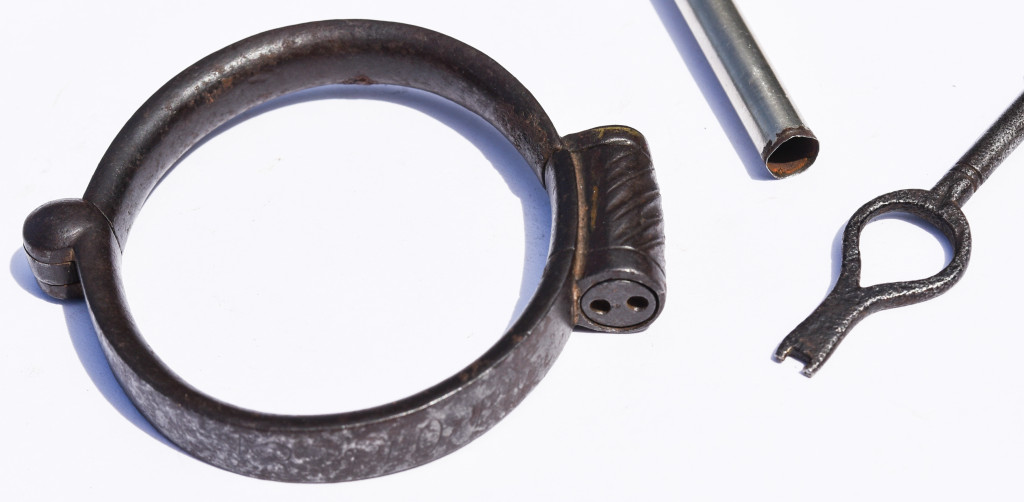
When I saw the cuff listed for the auction, I assumed that is was a conventional plug cuff. There was no key. When I received it, it was trivial to remove the
plug, but there was a surprise. The plug was not a conventional male plug. It was not a plug at all, it was a cap with inside female threads. At that point
the cuff was difficult to open completely. It was held shut by a nut, a five pointed nut. However as received the nut was screwed in upside down and it was
quite a struggle for me to remove it the first time. Once removed it was easy to operate by using a metal tube forced on to grip the five pointed nut inserted in
the proper orientation.
The Richard Orlebar shackle was thus made with an interesting mechanism that I had never seen before. Both the five pointed nut and the cap screwed on to the bolt.
The cap alone would lock the cuff so with the nut in place the cuff was essentially double locked. Quite ingenious. The original key would likely have consisted of a five-pointed socket wrench with double
prongs to remove the cap on the top.
The nice thing about this shackle is that not only does it have a nice mechanism, we can identify the original owner and assign a probable date of 1680 plus or minus a decade.
So this is one of my favorite cuffs.
Joe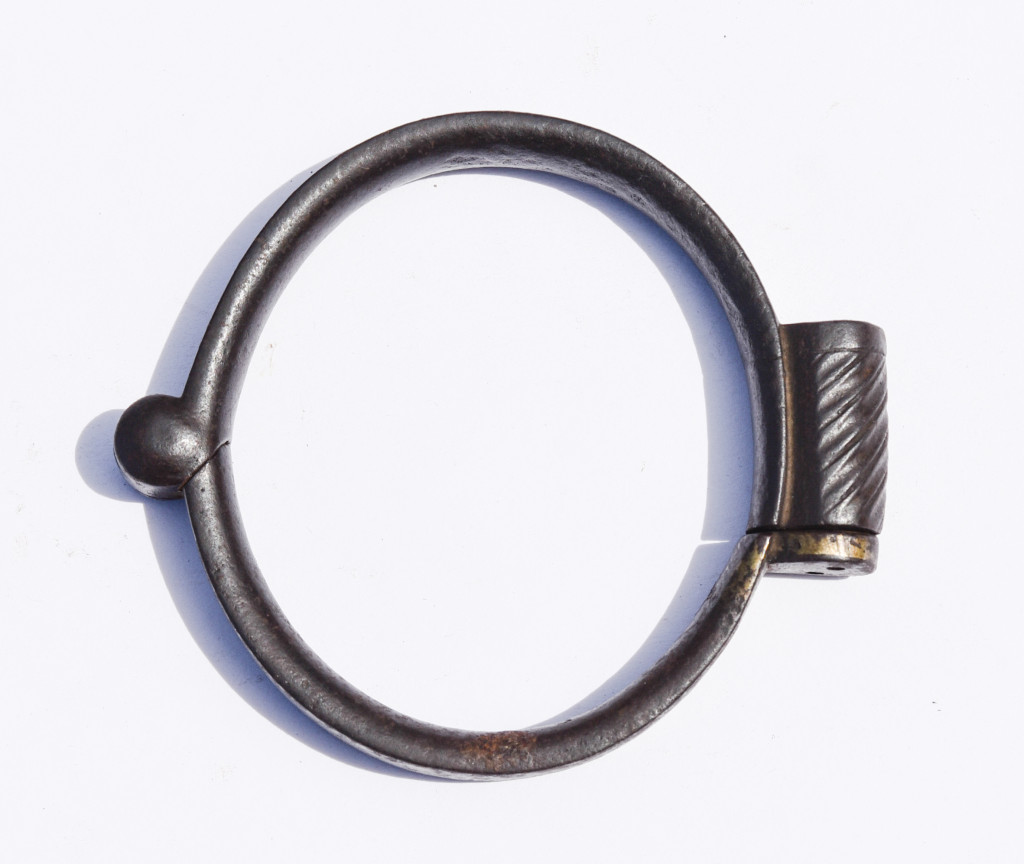
Here is the schedule for coming days. Take your pictures now.
18th Monday - Romer
19th Tuesday - Countries of the Former USSR
20th Wednesday - Froggatt
21st Thursday - Italy
22nd Friday - Clejuso
23rd Saturday Mattatuck, Maltby, and Judd
Nipper Madness Begins. A series of days devoted to nippers, grips and come-alongs.
24th Sunday - The US Patent List. How many can we find?
25th Monday - US Nippers - Not on the patent list, odd balls and copies.
26th Tuesday - British Nippers
27th Wednesday - European Nippers
28th Thursday - The Rest of the World
Pre 1800's restraints from around the world
Show us your oldest restraints, those likely made before 1800.
The age of manufactured restraints began in the late 17th century in Birmingham. Restraints made
earlier than 1800 are difficult to identify and to categorize. Let us see if we can make some order
out of the chaos.
I will start with the oldest cuff in my collection that has a definite provenance.
The Richard Orlebar Shackle
This ornate shackle was bought at auction a number of years ago. The English dealer said that is was found in the drawer of a Queen Anne desk.
The shackle was inscribed, "Rich Orlebar Esq. of Harrold of Bedford County."
Richard Orlebar of Harrold was easy to identify. An entire book devoted to the Orlebar family exists and I was able to locate a copy of the book.
Richard Orlebar was born circa 1648. He married Jane Hatton and in 1671 leased Harrold Hall, in the village of Harrold located in Bedfordshire.
http://harroldvillage.co.uk/harrold-his ... rold-hall/
Richard died in 1690. He had a son named Richard who became High Sheriff of Bedfordshire in 1721, but this second Richard did not live in Harrold.
When I saw the cuff listed for the auction, I assumed that is was a conventional plug cuff. There was no key. When I received it, it was trivial to remove the
plug, but there was a surprise. The plug was not a conventional male plug. It was not a plug at all, it was a cap with inside female threads. At that point
the cuff was difficult to open completely. It was held shut by a nut, a five pointed nut. However as received the nut was screwed in upside down and it was
quite a struggle for me to remove it the first time. Once removed it was easy to operate by using a metal tube forced on to grip the five pointed nut inserted in
the proper orientation.
The Richard Orlebar shackle was thus made with an interesting mechanism that I had never seen before. Both the five pointed nut and the cap screwed on to the bolt.
The cap alone would lock the cuff so with the nut in place the cuff was essentially double locked. Quite ingenious. The original key would likely have consisted of a five-pointed socket wrench with double
prongs to remove the cap on the top.
The nice thing about this shackle is that not only does it have a nice mechanism, we can identify the original owner and assign a probable date of 1680 plus or minus a decade.
So this is one of my favorite cuffs.
Joe