
djhalfdead
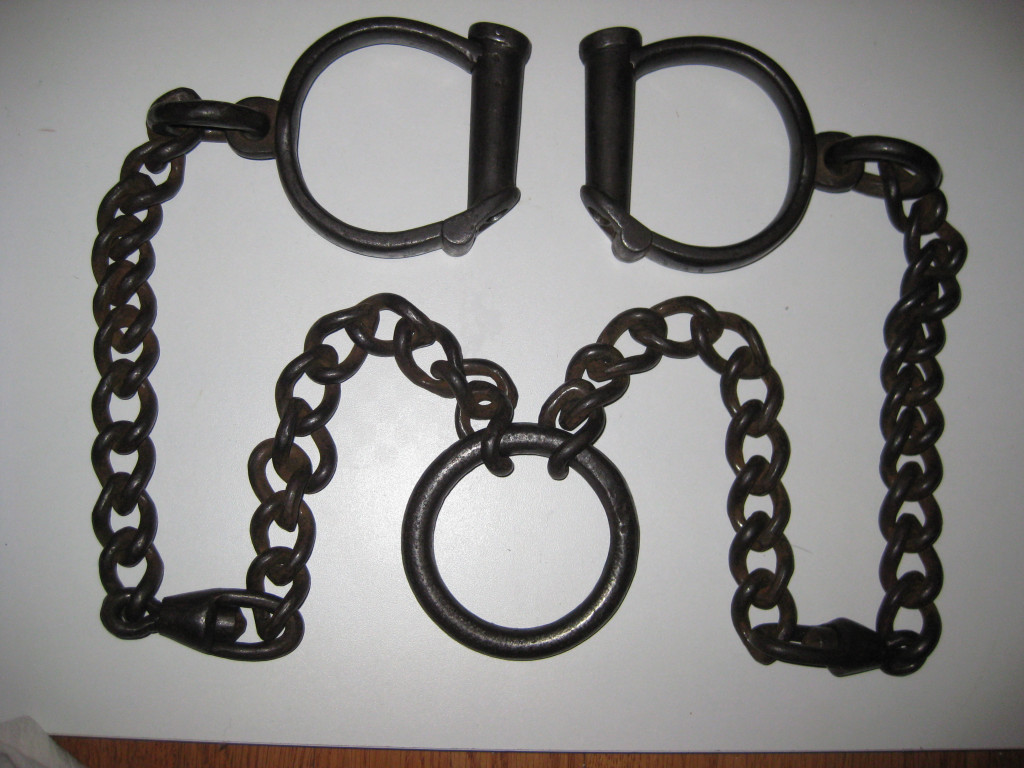
#1Spencer sent me one of his newest finds to check over and snap a few pics of the factory stampings, since neither of us could make out exactly what it said. With his permission, im here to share his latest treasure he was able to obtain for his collection! When I got them in the mail, they were really heavy and very well made! They have a rather long connecting chain with two swivels. The center ring, and the chain itself, is quite thick. I could tell they were quite old, but I didnt know how old, exactly. I almost reached out to Joe Lauher for information, but it was late at night and I didnt think Joe would would enjoy chatting when he was likely sleeping. So, I cracked open Joe's British Handcuffs book and started to thumb through the pages.
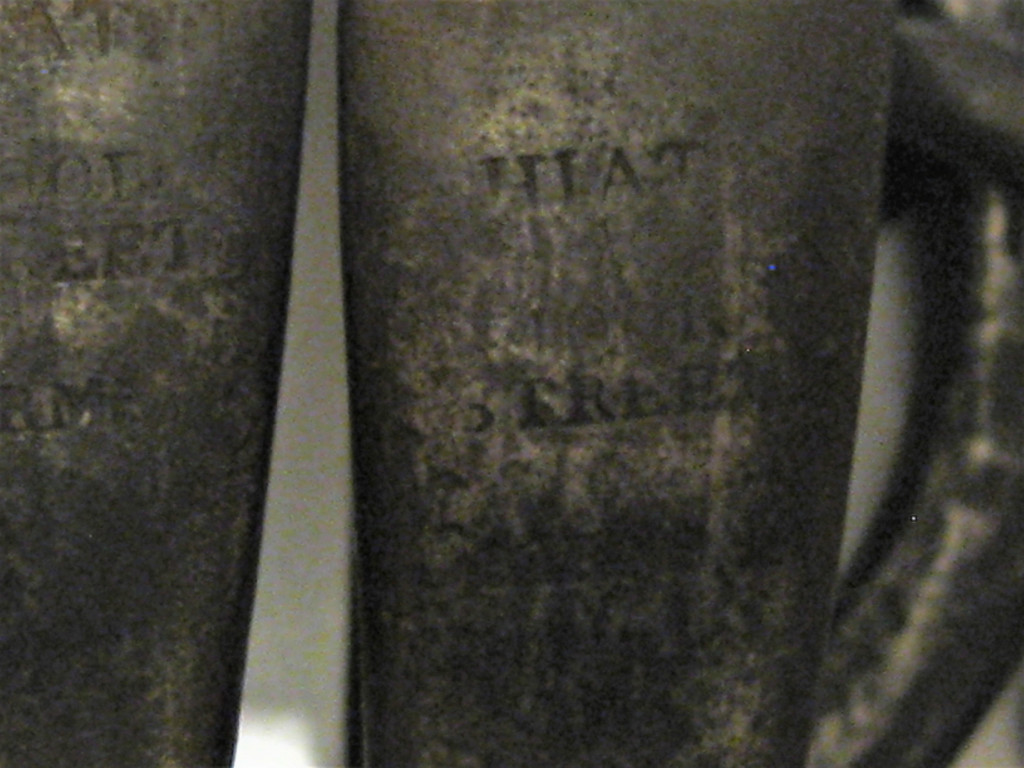
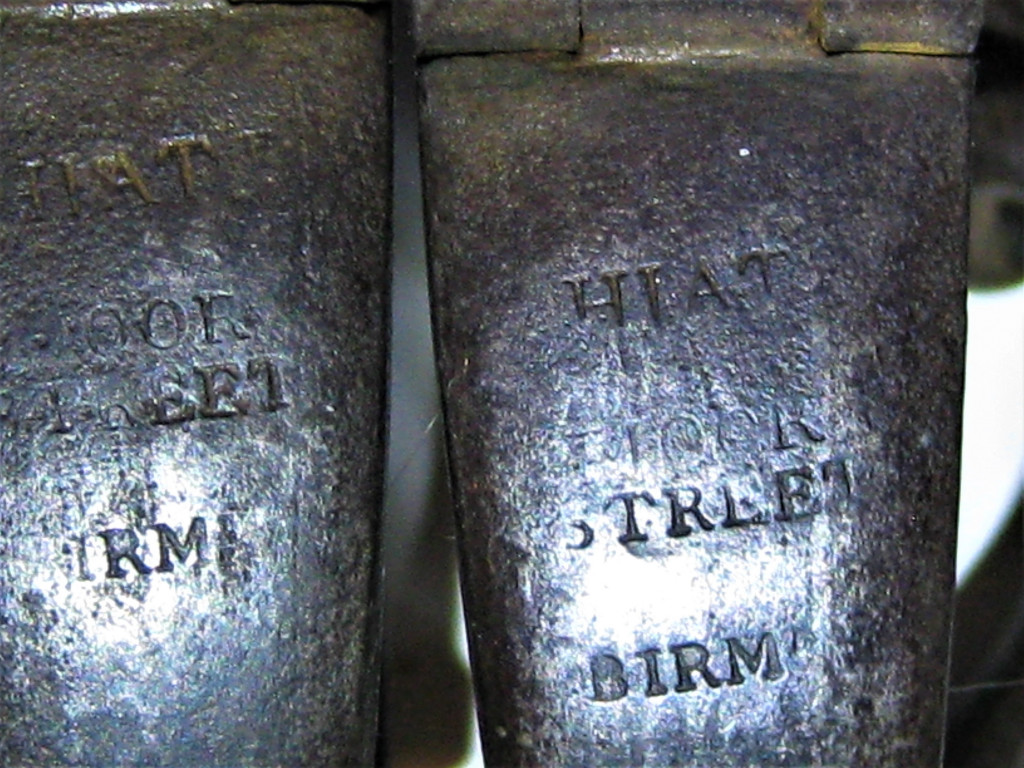
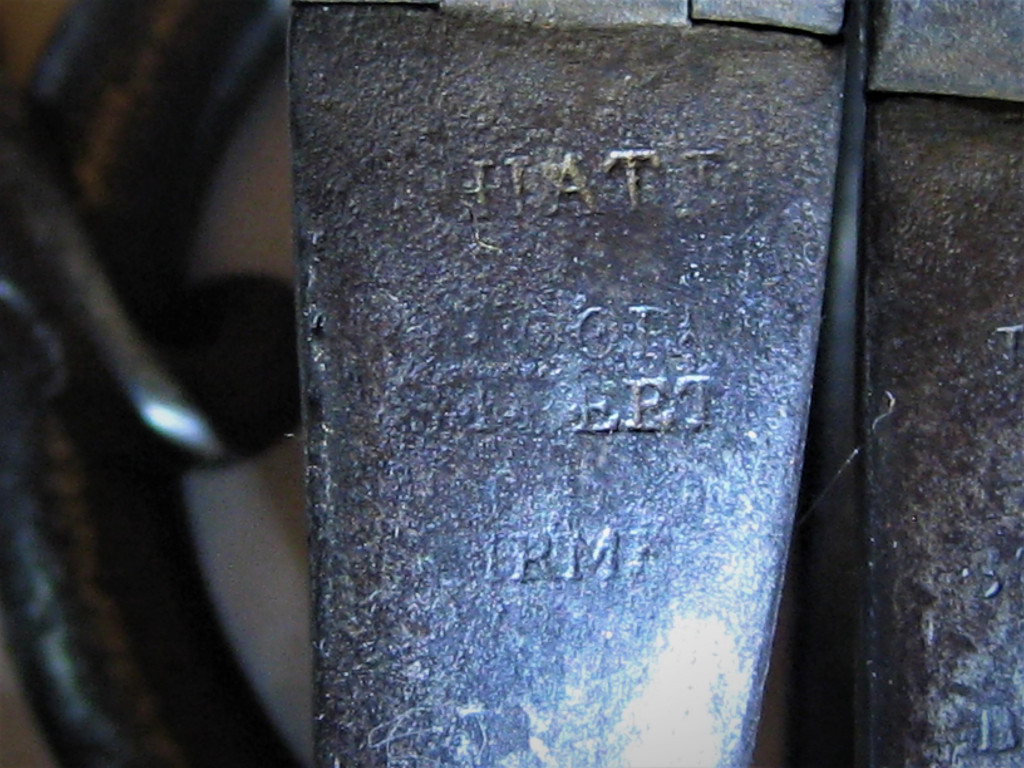
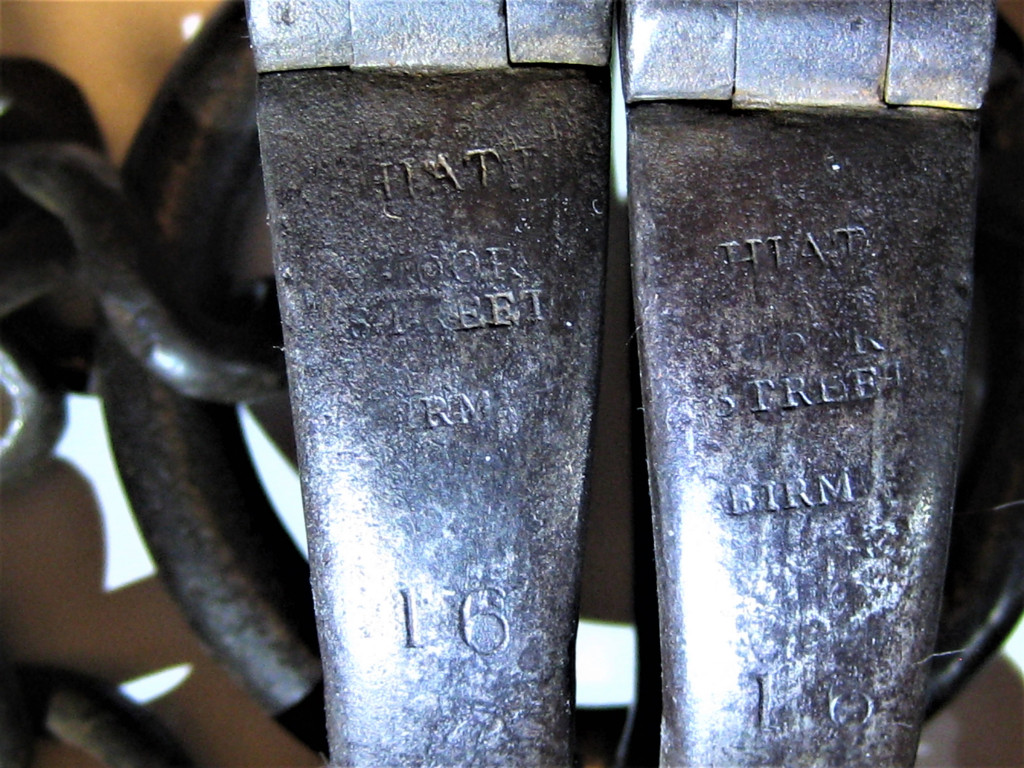
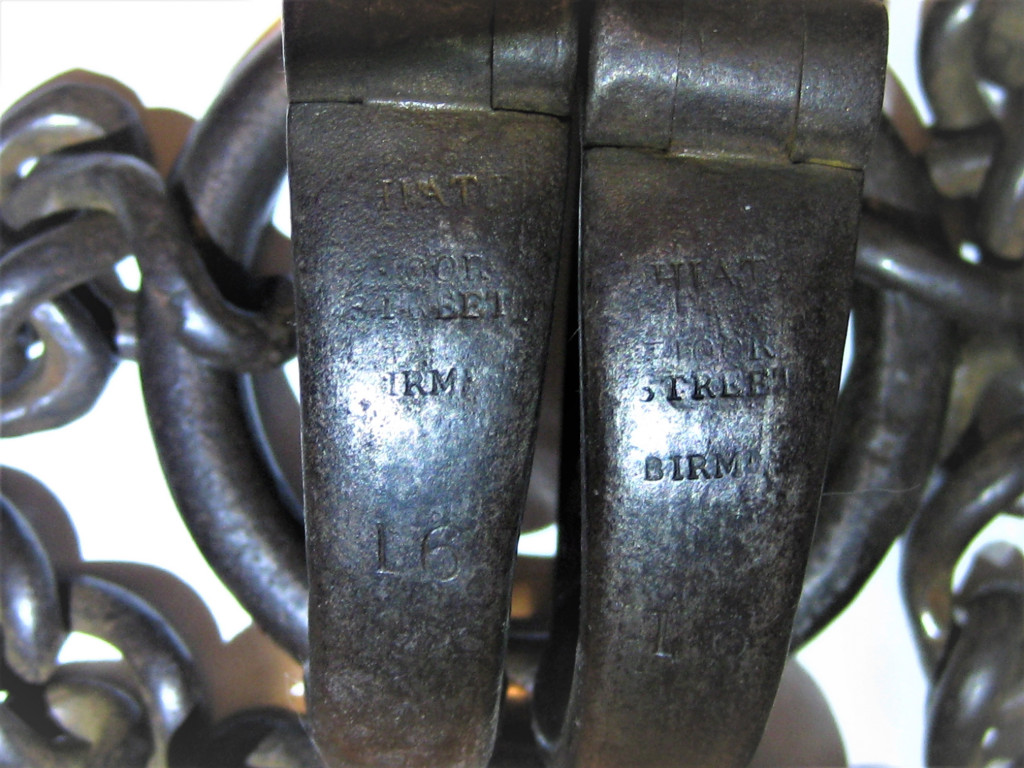
Upon examination, with the naked eye, both Spencer and I could make out clear enough that it was a pair made by Hiatt. I used a soft bristled toothbrush and lightly brushed away as much of the loose "patina" as I could without disturbing the natural color the irons had gained through the years. The brushing allowed some more edges of the letters to pop up and start to show through. I had gotten the surface a little damp, to also try to make the letters pop out a bit more. I started to be able to make out the word, "STREET." Underneath of the word, "STREET", I could make out enough letters to form the name, "BIRMINGHAM." Above the word "STREET", I noticed the round bottoms of two letters in the center and a letter on either side of them, that I couldnt make out. I figured the round bottoms were forming the letter "O", two of them, side by side. Armed with that much info I started digging through the book. I found a very handy chart on page IV. It showed a possible timeline for Major British Handcuff Companies. Entry #5 caught my eye. It reads, "About 1818, Thomas Griffin Hiatt establishes new operation, first on MOOR STREET, but soon Moves to Masshouse Lane." There was my answer! The two, side by side "O"s I could make out were for "MOOR STREET!" These leg Irons are factory stamped as being from Moor Street, in Birmingham. On page #8 of Joe's book, I found an entry that would help date these cuffs to 1818 or earlier. How much earlier than that, i do not know. Page #8 in Joe's book also states the T.G. Hiatt was at the Moor Street Location until at least 1818. But it doesnt say exactly when the Moor Street location actually opened and started making cuffs? If anyone out there can help fine tune these dates for Spencer and I, that would be much appreciated.
What a treasure to have in my hands! This is the oldest Darby style restraint, I have ever personally been hands on with! Very cool! And the best news, they still function and work very well! Spencer used a bit of penetrating oil to loosen up the locking bolt and the rest is history! The springs are both still in great shape, as well. The endcaps are both held on by two pins. Just a beautiful piece, that shows many years of use. Here are a few pics of the irons and of the factory stamps on them. When you look at them in person, the letters do not show up this clearly at all! Its taken some lighting tricks and a bit of photoshop adjusting to make the letters pop out like they do in the pics. I hope you enjoy seeing these results! Spencer, Congratulations on owning a great piece of restraint history!
-Richard Knip-
Upon examination, with the naked eye, both Spencer and I could make out clear enough that it was a pair made by Hiatt. I used a soft bristled toothbrush and lightly brushed away as much of the loose "patina" as I could without disturbing the natural color the irons had gained through the years. The brushing allowed some more edges of the letters to pop up and start to show through. I had gotten the surface a little damp, to also try to make the letters pop out a bit more. I started to be able to make out the word, "STREET." Underneath of the word, "STREET", I could make out enough letters to form the name, "BIRMINGHAM." Above the word "STREET", I noticed the round bottoms of two letters in the center and a letter on either side of them, that I couldnt make out. I figured the round bottoms were forming the letter "O", two of them, side by side. Armed with that much info I started digging through the book. I found a very handy chart on page IV. It showed a possible timeline for Major British Handcuff Companies. Entry #5 caught my eye. It reads, "About 1818, Thomas Griffin Hiatt establishes new operation, first on MOOR STREET, but soon Moves to Masshouse Lane." There was my answer! The two, side by side "O"s I could make out were for "MOOR STREET!" These leg Irons are factory stamped as being from Moor Street, in Birmingham. On page #8 of Joe's book, I found an entry that would help date these cuffs to 1818 or earlier. How much earlier than that, i do not know. Page #8 in Joe's book also states the T.G. Hiatt was at the Moor Street Location until at least 1818. But it doesnt say exactly when the Moor Street location actually opened and started making cuffs? If anyone out there can help fine tune these dates for Spencer and I, that would be much appreciated.
What a treasure to have in my hands! This is the oldest Darby style restraint, I have ever personally been hands on with! Very cool! And the best news, they still function and work very well! Spencer used a bit of penetrating oil to loosen up the locking bolt and the rest is history! The springs are both still in great shape, as well. The endcaps are both held on by two pins. Just a beautiful piece, that shows many years of use. Here are a few pics of the irons and of the factory stamps on them. When you look at them in person, the letters do not show up this clearly at all! Its taken some lighting tricks and a bit of photoshop adjusting to make the letters pop out like they do in the pics. I hope you enjoy seeing these results! Spencer, Congratulations on owning a great piece of restraint history!
-Richard Knip-
+3