djhalfdead
#1I will solve the mystery of who paid way too much for this cuff on Ebay, this last weekend. It was I. This is the 2nd most I have spent on any restraint in my collection, thus far. If anyone on here was the 2nd bidder under me, feel free to make yourself known. Somebody ran me up on the price for these and was very close to beating me! That being said, i have gotten to look them over and chat with the seller about them a bit. At first, looking at his pics on Ebay, I was skeptical that these were truly made by a designer from S&W as a Prototype (i know a member here doesnt like to use that word, but this is truly what they are). Some of the work, just didnt quite look right to me. But, the seller let me know that he bought the cuffs from an estate sale, for a gentleman who was a designer for S&W. I also have some pieces from that estate sale. The seller was able to give me the designer's name and the location of the estate sale, without me giving him that information. So, that does check out with me, these truly did come from a S&W employee.
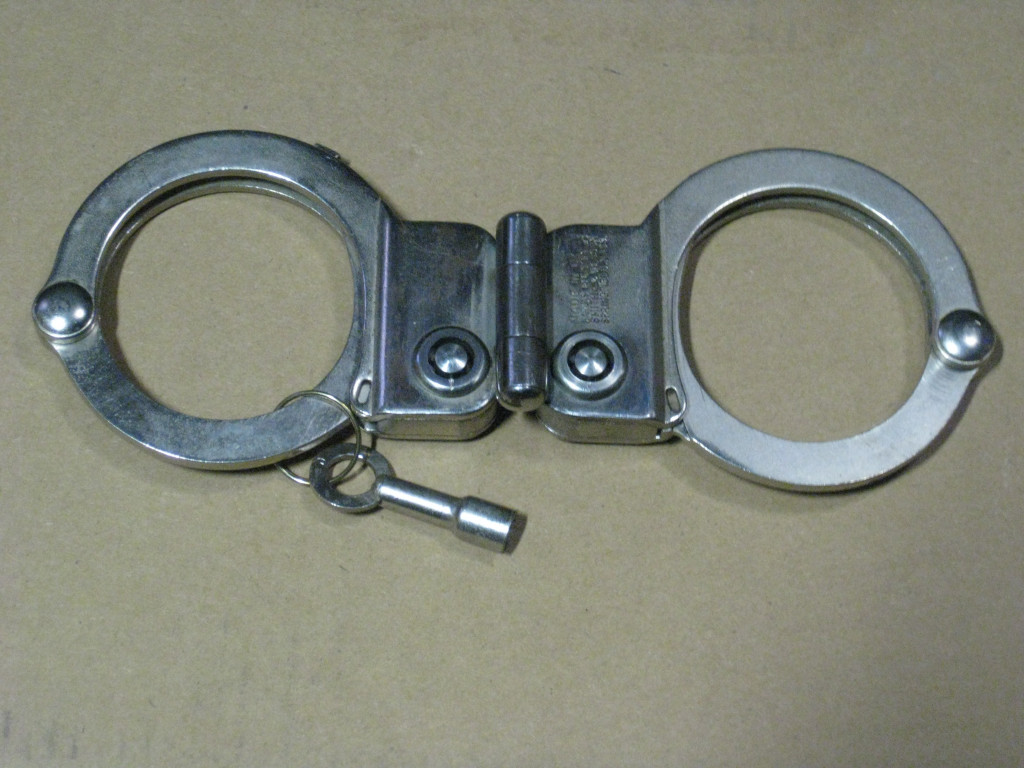
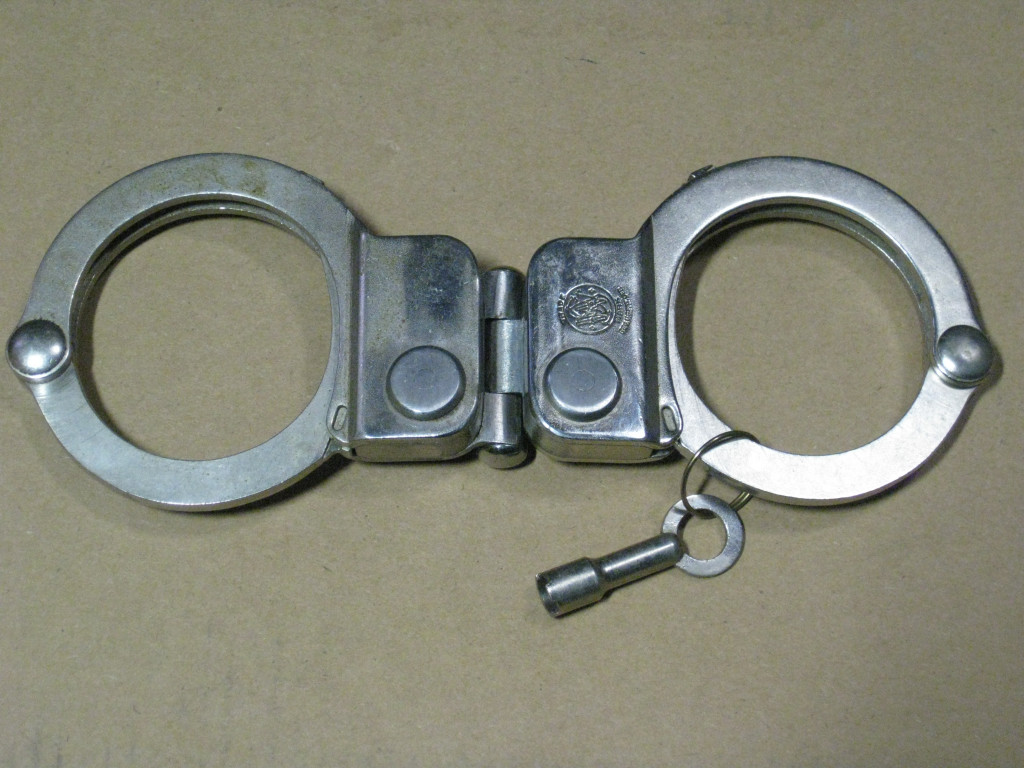
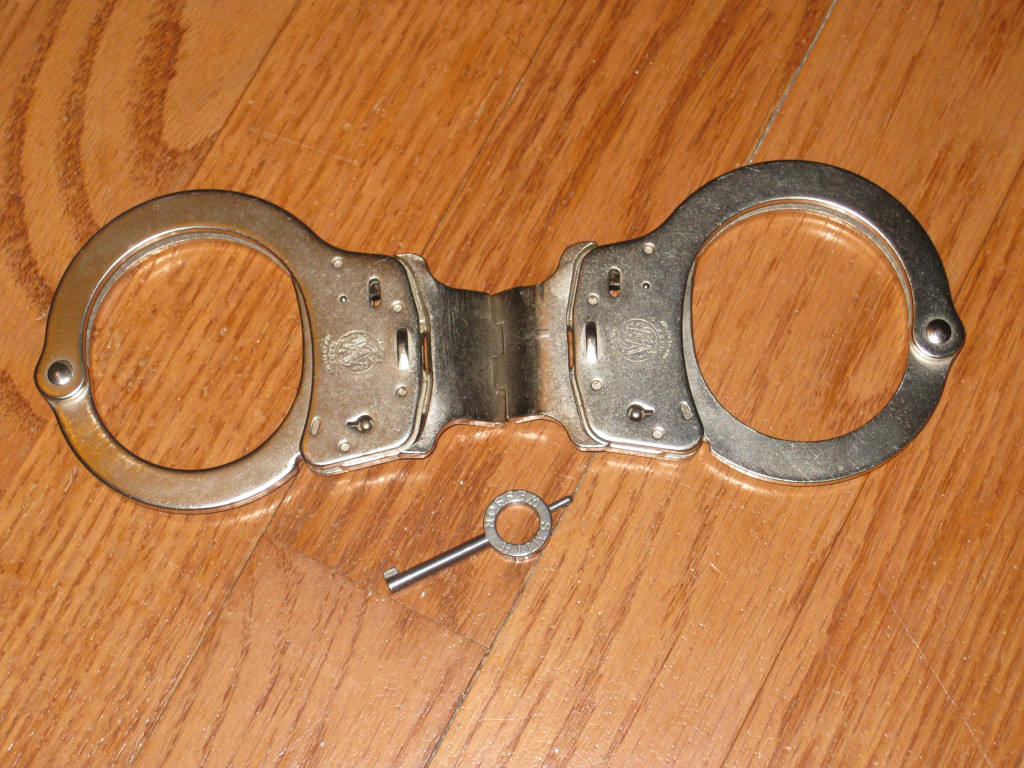
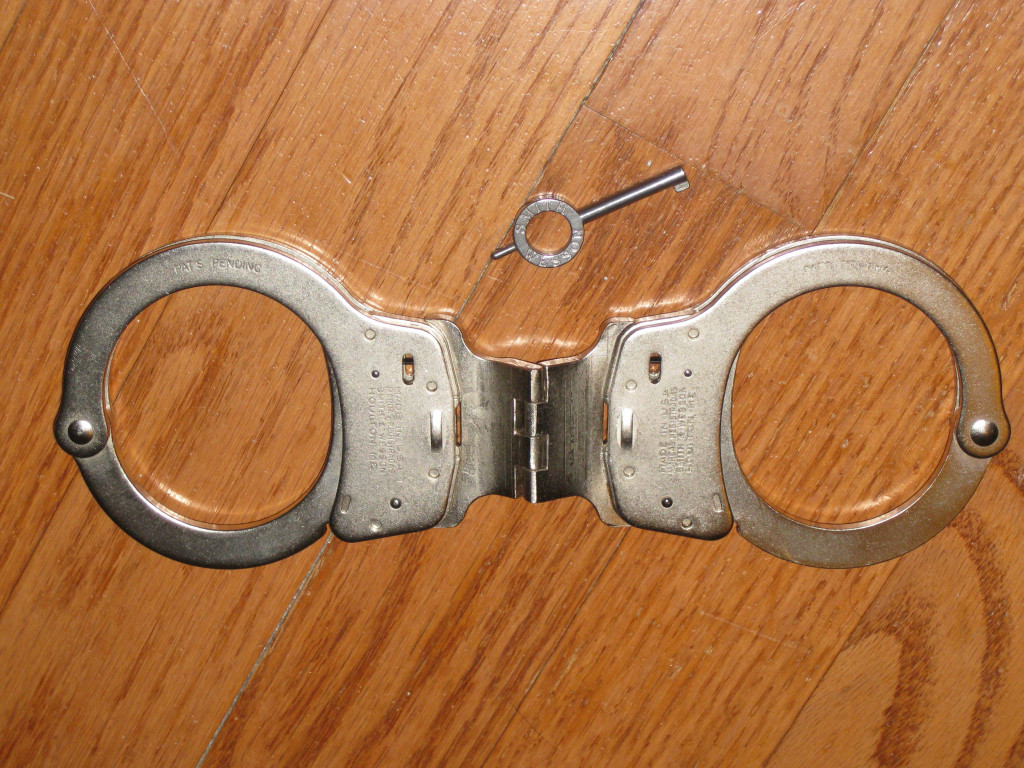
They are a "D" stamped restricted key code and came with the one key pictured. Both cuffs work great in single and double locking modes. The hinge is the odd part. As many of you may know, the body design of the S&W Model 94 is a one piece design. Meaning the front of the cuff body , the bottom and the rear of the cuff body are all stamped from one piece of steel and folded over, so there are no seams to be seen and no welding/braising/riveting to hold them together. The only point that holds them together, is the hinge pin and the lock assembly itself. Looking these over, the hinges are actually a part of the steel that makes up the front plate (body) of the cuff and the back plate of the cuff. The center section is hand fabricated and the cuff is assembled much like a Model 90 or the Model 100 would have been. To make the hinges, the front cuff body was cut out and the tail on the bottom was left as a long piece to be rolled over into the barrel shape of the hinge. Same with the back plate, not something that could be done, by someone in a home shop, with an existing Model 94 without some extensive welding and grinding, smoothing to extend the front and rear cuff bodies and hide the welds. As you can imagine, this is a very restrictive cuff! Why they decided not to make these, I do not know? I think they would have been a decent seller, depending on the price, of course. I imagine with the extra work it would take to make these, it would have been expensive to do. Still a neat piece to add to my collection!
This makes for the 2nd official prototype of S&W cuffs I have in my collection. Beside this set, I have the prototype for the hinges on the Model 200 Handcuffs. The Prototype M-200 I have has a smaller hinge with only two teeth instead of what came out on the production model. Very fortunate to have purchased both of these, though many years apart from each other.
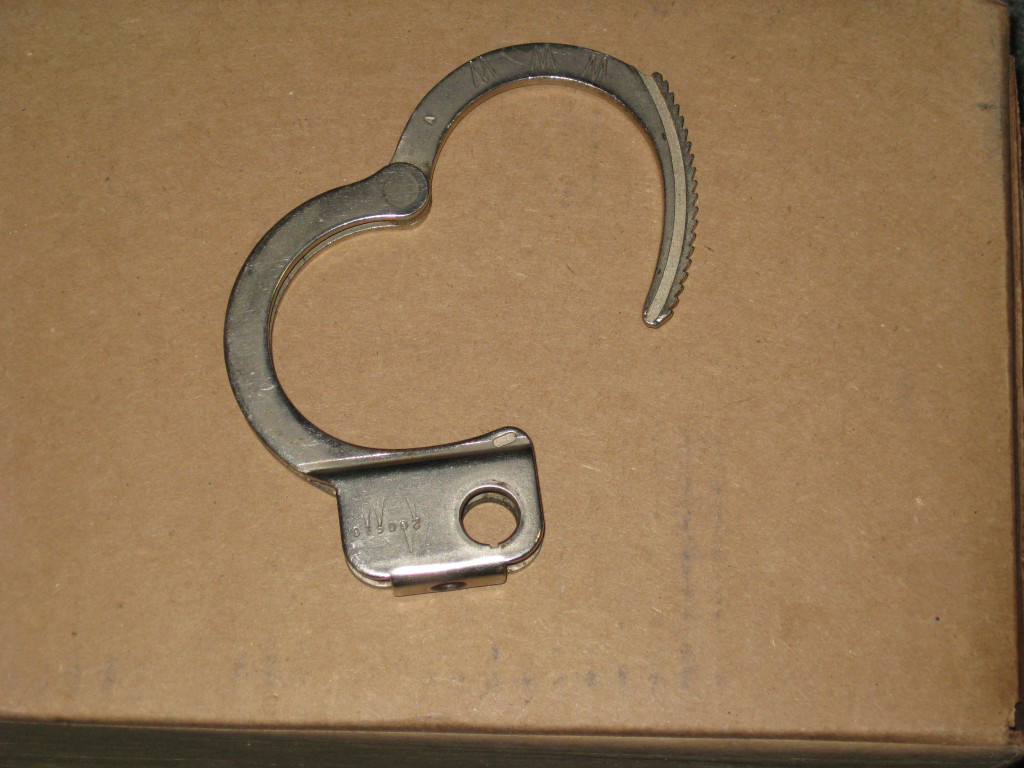
Pic 1. Is the side view of a standard one piece Model 94 cuff body, to show how they are folded over.
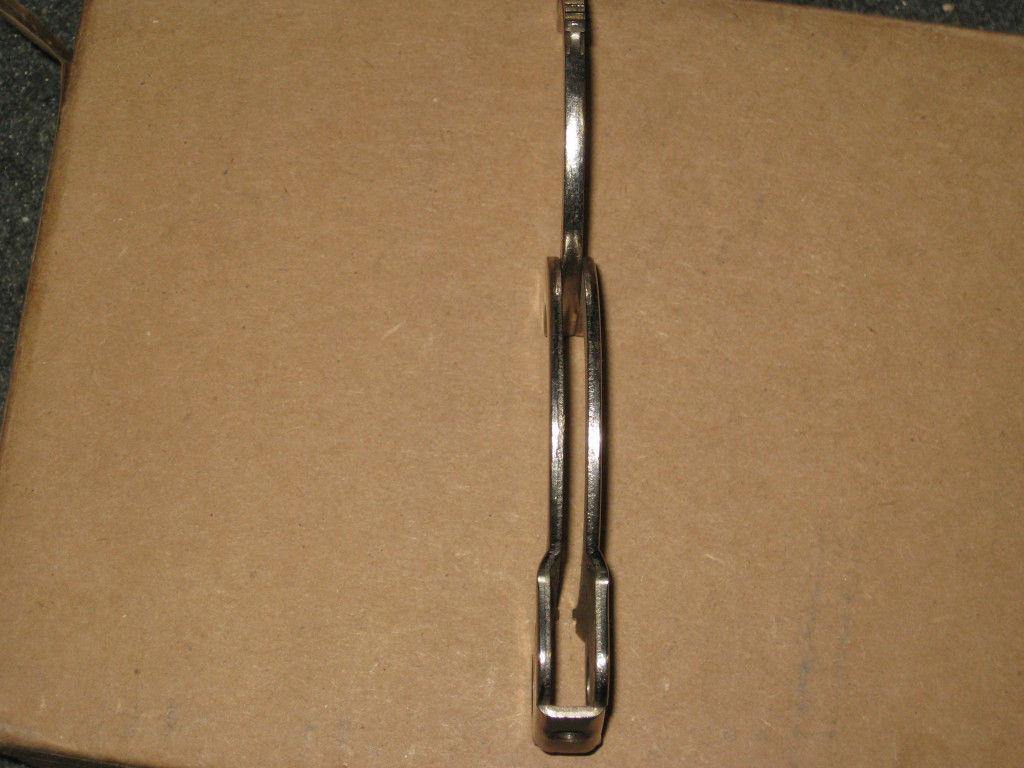
Pic 2. Is the top view, looking down, of the standard Model 94 cuff body.
Pic 3. Is the front of the Model 94 Prototype Hinged Handcuff.
Pic 4. Is the back of the Model 94 Prototype Hinged Handcuff.
Pic 5 is the front of the Model 200 Prototype Hinged Handcuff showing the thinner hinges with only two teeth per side.
Pic 6. Is the back of the Model 200 Prototype Hinged Handcuffs.
-Richard Knip-
They are a "D" stamped restricted key code and came with the one key pictured. Both cuffs work great in single and double locking modes. The hinge is the odd part. As many of you may know, the body design of the S&W Model 94 is a one piece design. Meaning the front of the cuff body , the bottom and the rear of the cuff body are all stamped from one piece of steel and folded over, so there are no seams to be seen and no welding/braising/riveting to hold them together. The only point that holds them together, is the hinge pin and the lock assembly itself. Looking these over, the hinges are actually a part of the steel that makes up the front plate (body) of the cuff and the back plate of the cuff. The center section is hand fabricated and the cuff is assembled much like a Model 90 or the Model 100 would have been. To make the hinges, the front cuff body was cut out and the tail on the bottom was left as a long piece to be rolled over into the barrel shape of the hinge. Same with the back plate, not something that could be done, by someone in a home shop, with an existing Model 94 without some extensive welding and grinding, smoothing to extend the front and rear cuff bodies and hide the welds. As you can imagine, this is a very restrictive cuff! Why they decided not to make these, I do not know? I think they would have been a decent seller, depending on the price, of course. I imagine with the extra work it would take to make these, it would have been expensive to do. Still a neat piece to add to my collection!
This makes for the 2nd official prototype of S&W cuffs I have in my collection. Beside this set, I have the prototype for the hinges on the Model 200 Handcuffs. The Prototype M-200 I have has a smaller hinge with only two teeth instead of what came out on the production model. Very fortunate to have purchased both of these, though many years apart from each other.
Pic 1. Is the side view of a standard one piece Model 94 cuff body, to show how they are folded over.
Pic 2. Is the top view, looking down, of the standard Model 94 cuff body.
Pic 3. Is the front of the Model 94 Prototype Hinged Handcuff.
Pic 4. Is the back of the Model 94 Prototype Hinged Handcuff.
Pic 5 is the front of the Model 200 Prototype Hinged Handcuff showing the thinner hinges with only two teeth per side.
Pic 6. Is the back of the Model 200 Prototype Hinged Handcuffs.
-Richard Knip-
+3