Mark Lyons O--O Cuffs 27 Feb 2024
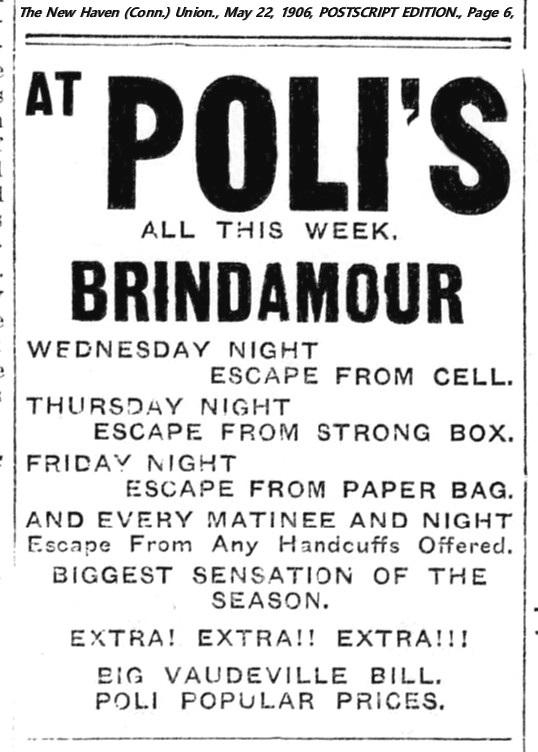
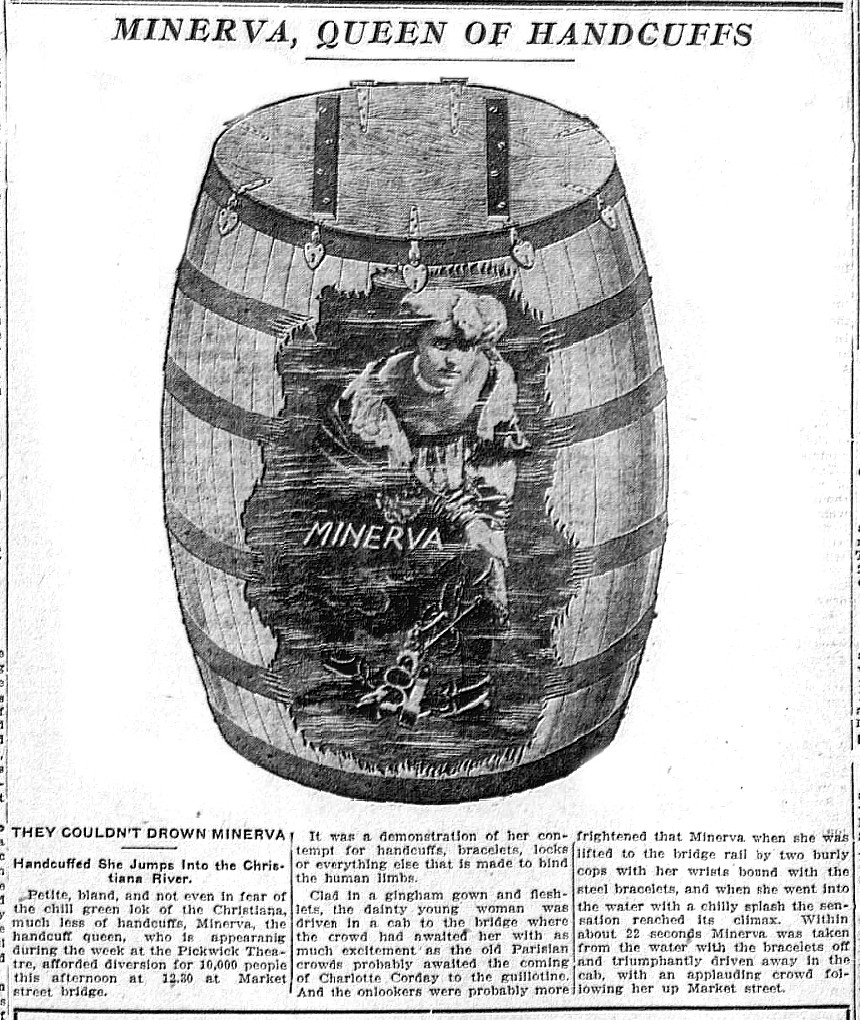
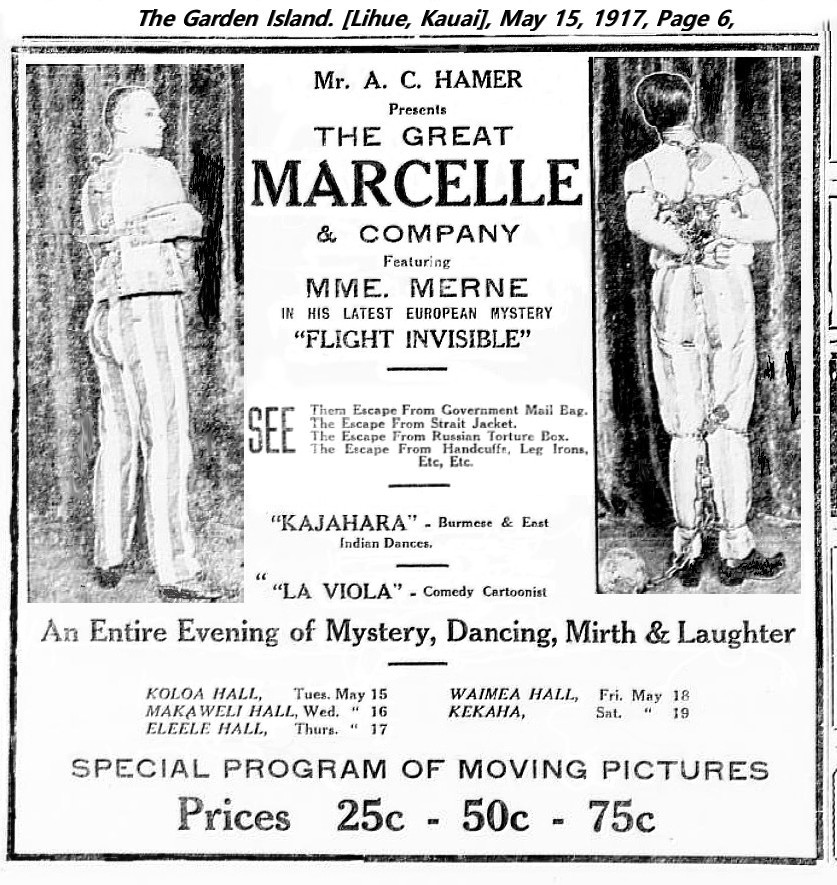
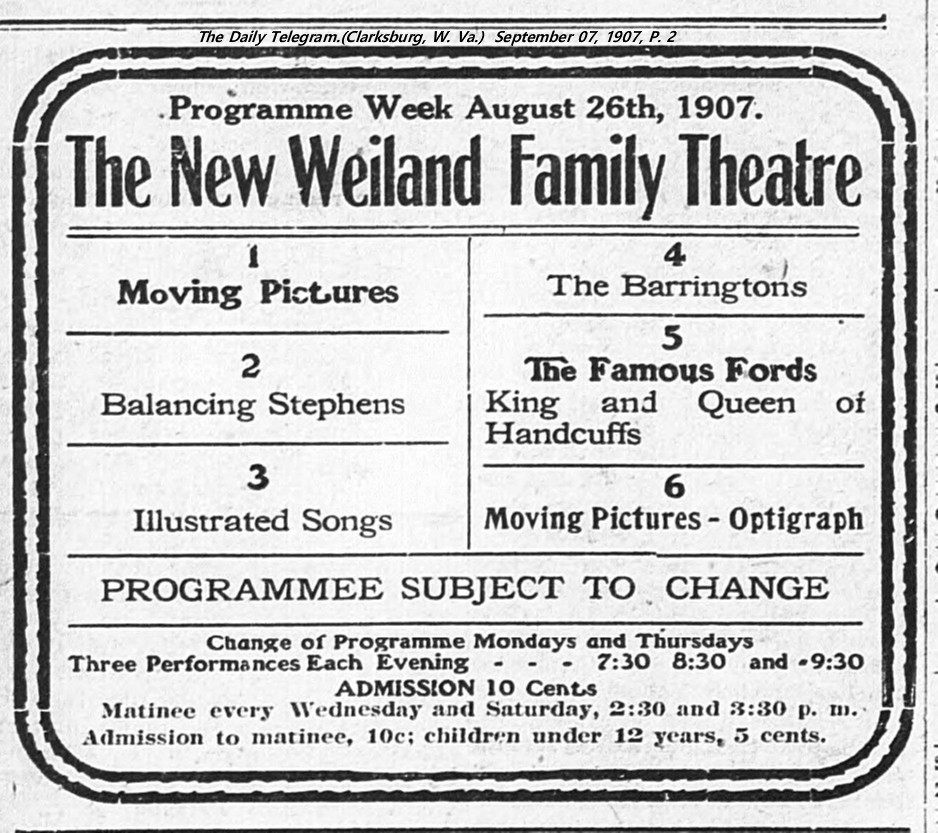
#1We all know Houdini, Hardeen and some of the many Escape Artists of today, but how many of these have you heard of?
I have some pics and post cards of a few of them.
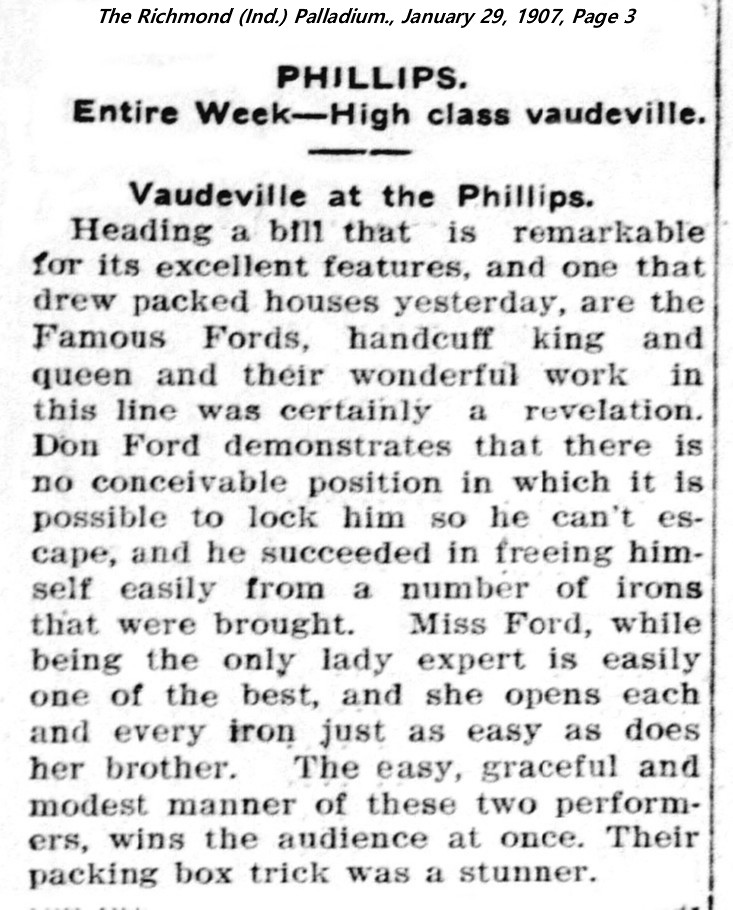
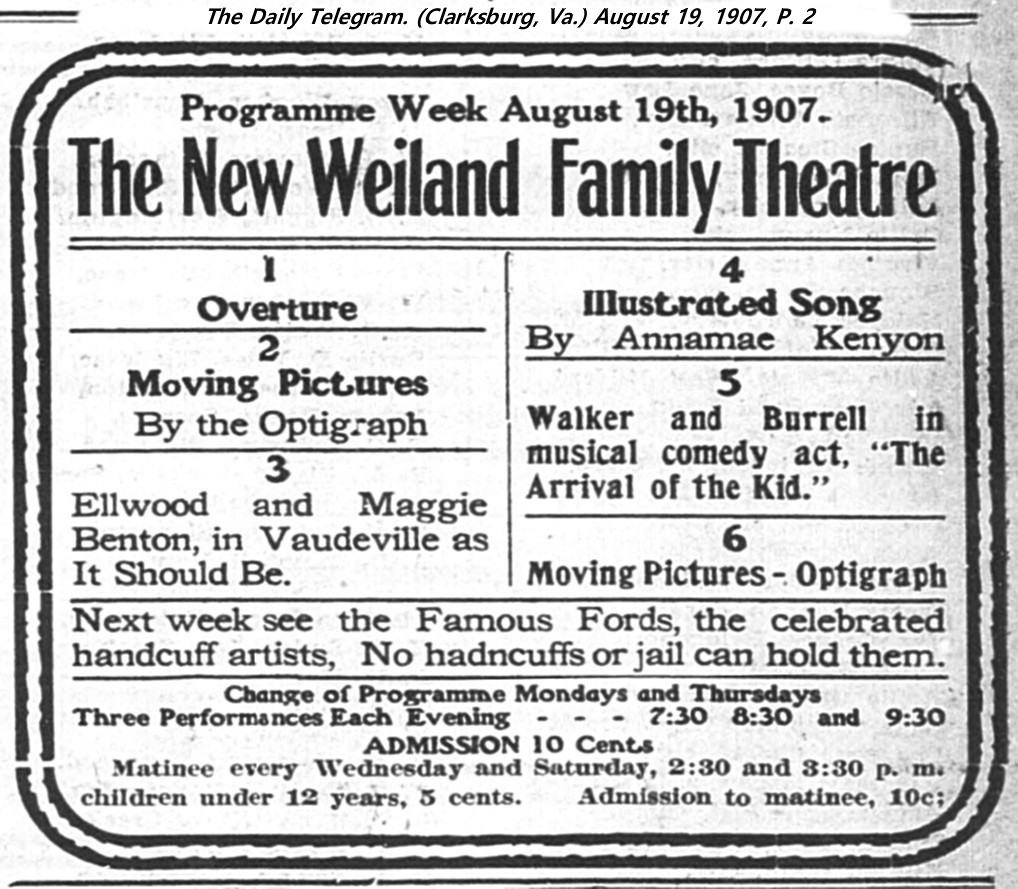
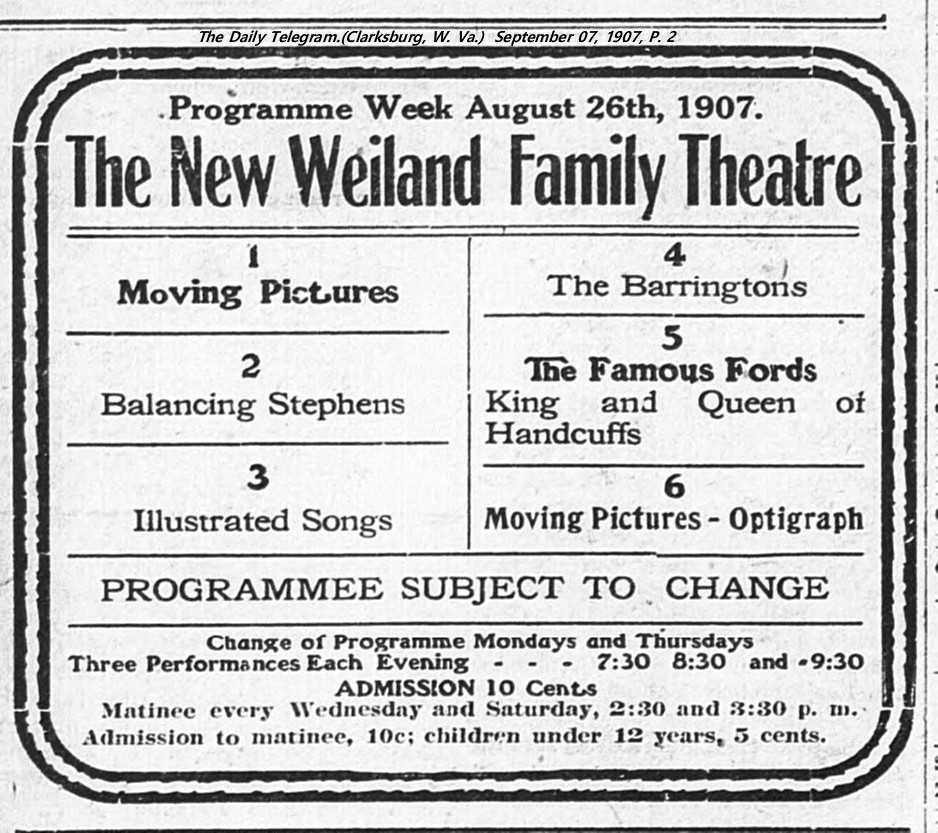
It seems that the early 1900's were the "golden years" for handcuff acts.
I will keep looking, but I am not finding all that much in the 30's and up.
.
.
.
.
.
.
.
.
.
Unknown / guest 28 Feb 2024
#2Brindamour
Unknown / guest 28 Feb 2024
#3vakevainen.mika 29 Feb 2024
#4Two Finnish escapologists; brothers Uno and August Sunell.
They moved to USA 1906 and it has been told that they met Harry Houdini and bought some props from Harry.
At 1910 they moved back to Finland and performed escapology in Finland and Sweden.
Part of their props are now in smaal Finnish local village museum.
Unknown / guest 29 Feb 2024
#5One more Sunell photo
Mark Lyons O--O Cuffs 01 Mar 2024
#6vakevainen.mika wrote:
↑Feb 29, 2024
Two Finnish escapologists; brothers Uno and August Sunell.
They moved to USA 1906 and it has been told that they met Harry Houdini and bought some props from Harry.
At 1910 they moved back to Finland and performed escapology in Finland and Sweden.
Part of their props are now in smaal Finnish local village museum.
Excellent!
Thank you for your contribution.
I was not aware of any other artist than Timo.
Unknown / guest 01 Mar 2024
#7This is just the text from this 1915 newspaper.
Some of its content is accurate and maybe somewhat less on other facts.
The Democratic Banner, April 30, 1915, P. 4
Throwing Off Fetters;
Some Methods Used
Methods for fastening the arms and legs of prisoners to prevent them escaping or doing injury were in vogue in ancient Egypt, where hieroglyphic pictures on walls of ruins show men and women manacled with chain or lengths of flexible iron rods loosely fastened by the ends so that the bond could be adjusted in a circle and thus grip the arm or leg. Various kinds of inventions for restraining criminals have been thought of by the inventor since the days of the Pharaohs, but the modern manacle is far different from the heavy metal clasps which pressed into the flesh and inflicted continual torture until death ensued from the pain, if the victim remained fettered long enough.
Today, the police handcuff, the leg-iron, and other appliances for restraining a prisoner are so designed that they cause no pain, unless, in the effort to free himself, the man wrenches and pulls at his hands and legs in the struggle to break them. There are ways, however, by which what seems to be a perfectly protecting handcuff may be removed and the wearer gains his liberty. These methods have been discovered by detectives in the larger cities of America as well as Europe, where prisoners have escaped although so fettered that it seemed impossible for them to loosen their shackles. Among the criminal fraternity in the United States some of those who apparently can remove the most clever device to hold them helpless are termed "Never Stays, "meaning they always escape from confinement. Some of these experts in throwing off their fetters have given up the criminal life to give entertainments in theatres, where they can show their skill. A description of some of their "acts" will convey an idea of their wonderful dexterity in releasing themselves from bondage. Among the most interesting feats are those of the man who manages to escape in some manner from all sorts of regulation handcuffs, manacles, leg-Irons, etc. Several of these are placed on him; and then the performer retires into his small cabinet and emerges in a few minutes entirely free from all restraint. The handcuffs are in every case genuine, and no confederates are employed. It is a very clever illusion. There are several trick-handcuffs made for such exhibitions, and if the performer be allowed to use his own cuffs they may be of this kind. There are trick-cuffs of various sorts. Some of those simply pull open and are never properly locked. In other makes, the links of the connecting chain are weakened. Again, the lock itself has been tampered with, so that a blow on the hinge serves to release it. Many of them may be opened with a loop of catgut or shoestring inserted into the keyhole. This catches the lock and jerks it back. The style of cuff known as the "German transport chain" is never really unlocked; the hands merely slip the chain after certain manipulations of the hands and arms. Most padlocks are picked with one of the numerous skeleton keys with which the performer is sure to provide himself. French letter locks are opened by finding the proper combination. This is largely a matter of touch, facilitated by placing a wire spring between the arms of the catch to keep them pressed well back. If the performer is not to be searched his task is comparatively easy. Keys may be concealed in his clothing, in various special pockets or in the draperies of his cabinet. If, however, he is to be searched he must take precautions. Special keys are then concealed in a false boot heel, in the mouth, in the hair or in an artificial finger which is hollow. In any of these the article may be hidden. If the key is hidden in the hair this should be long and bushy, and the performer, after having had his hands examined, may say to the Examining Committee: "Would you like to examine my hair also and so that it conceals nothing?" As he says this, he passes one of his hands through his hair with cureless motion and thereby extracts the key, which he promptly conceals in one of his hands or elsewhere as they have already seen the hand, they do not look at it again, and it is safe for him to hide the key in it. A key may also be concealed in the corner of a handkerchief, and in this case, an opposite corner can be reached with the teeth. The key being leached in this manner, the performer employs it to open the cuffs as described. There are many contrivances known as "fakes," which are used to open the locks of various handcuffs under conditions in which it would be found impossible, even if the performer were in possession of the key, to use it. One imitator of an escaped prisoner has introduced an ingenious "fake" of this kind, with which the majority of Englis regulation cuffs can he opened. This "fake" is nothing more than a tiny steel tube, tapered, with a wire fitted through the center. To open the irons, the end is thrust into the lock, and the spiral lock spring caught with the longest end of the tube and then pulled outward. It is quite an easy matter to open cuffs and irons by this device. Of late a new regulation key has been adopted in England, having the thread on the outside instead of the inside. The "fake" will be found to open almost any cuff having even this new improvement, they key being simply pushed home until it accommodates the thread of the particular cuff used. It must be borne in mind that hand cuffs are of various makes, but that every cuff of a certain make is the same, so that the same regulation key will open all of them. Consequently, the same means may be relied upon to open all of them. A new and ingenious "fake" has recently been devised, by means of which the majority of regulation handcuffs and leg irons, fitted with powerful springs, can be opened. A key is known as a "master-key" when it will unlock two or more handcuffs, padlocks or any other form of lock. Houdini, the noted magician, devised an ingenious master-key, with which he was enabled to open almost any regulation handcuff of the English make. It is composed of a regular key split on one side, so that it could be forced open more or less to accommodate the size of the thread in the lock presented. Three or four spilt keys of this variety of different sizes, fastened together upon a common framework would enable the performer to escape from almost any English regulation cuff presented to him. An especially long key, and a key having a left-handed thread, may also be included in the performer's outfit.
Considering the various makes of handcuffs and release therefrom, it may be well to describe first of all ono known as the "Bean handcuff." This is a cuff of American make, which when first patented was considered exceptionally safe. It is exceedingly difficult for the performer to reach the keyhole of these cuffs with the key when once they have been fastened up on him. Yet in presenting this trick the performer not only has no duplicate key, but even allows the keyholes to be sealed, thereby showing that no duplicate key of any kind is used. The release in this case is affected by means of a novel device. This is inserted into the lock, and being pressed home, forces back the spring-catch. The catch being forced back, it can be slipped open almost instantaneously, and the release is affected. This is a trick that usually interests the audience, and one frequently done because of the effect presented in allowing the keyholes to lie sealed. The "Bean cuff" must not be confounded with the "Bean Giant," which in many respects is the safest and most perfect handcuff ever devised. If this cuff be locked upon the wrists with the keyhole away from the fingers, it is impossible to open it, even with the aid of the key. The performer generally produces a decided impression by locking the cuffs upon some member of the committee, giving him the key and asking him to unlock himself. It will be found impossible to do so. In order to open the cuffs a curious instrument must be employed. It consists of a long strip of metal, to the end of which a key similar to the original is fastened, though of finer make.
When the performer enters his cabinet he gets possession of this metal strip, and holding the broad end of it beneath his teeth, he inserts the key into the lock, and by this means opens the keyhole away from the body they may be forced on to a key fastened in the woodwork of the stage, in the cabinet, or held in some secure position, and opened by being turned upon the key. Another important point is that these cuffs will not be properly locked until the two small knobs above and below the keyhole are pressed home.
A very ingenious and complicated cuff, known as the "figure 8" or "plug 8" handcuff, has also been invented. The cuffs having been closed upon the wrists, are fastened by means of a small screw or plug which is firmly screwed into the lock. In order to open these cuffs, it is necessary to unscrew the plug, then to insert the key, and turn first to the right, then to the left, similar to opening the lock on a bank vault, so many times until the catch is released. In order to escape from this handcuff, it is necessary first of all to unscrew the plug. This may be done by means of a "fake" held in the teeth or by a more ingenious mechanism of a rather complicated nature, which is inserted into the plug, and one of its wheels being held between the teeth, the other wheel is turned by means of a tongue, and this served to unscrew the plug.
Unknown / guest 01 Mar 2024
#8vakevainen.mika 03 Mar 2024
#9Escape Queen Elisabeth (Finland 1930´s).
I have been trying to identify this escape artist for many years without any success. When I originally obtained this print block I posted it on this Forum and many collectors responded, however no-one could identify him. The image plate is 4 1/2 x 6 1/2 inches and mounted on a heavy piece of wood. I think it may have been used to print window cards for the artist. I have been checking all the major auction houses that sell posters and prints without any success.
Ron
vakevainen.mika 20 Mar 2024
#11Timo Tuomivaara (on his collection cottage in Posio, photo (c) Veli Granö 1996)
Mark Lyons O--O Cuffs 21 Mar 2024
#12vakevainen.mika wrote:
↑Mar 20, 2024
Timo Tuomivaara (on his collection cottage in Posio, photo (c) Veli Granö 1996)
Excellent!
I've never seen a pic of him before now!
Here is one that I just found.
vakevainen.mika 21 Mar 2024
#13"I want to to to the electric chair" says young magician and escape artist from Rovaniemi, who has not been detained any shackles or straitjackets. "I would love to try to escape from electric chair for a change for example 30 seconds time to switch on power....
Unknown / guest 22 Apr 2024
#16Commercial Post Card.
Finnish language "Don Alfonso Maailmankuulu kahlekuningas" (Don Alfonso World famous escape king)
Don Alfonso was German escape artist.
about 1930´s.